
Hooded Oriole
Icterus cucullatus
Least Concern
Overview
The hooded oriole, Icterus cucullatus, is a medium-sized New World oriole characterised by striking coloration. It is classified as Least Concern on the IUCN Red List, indicating a stable population status.
Identification
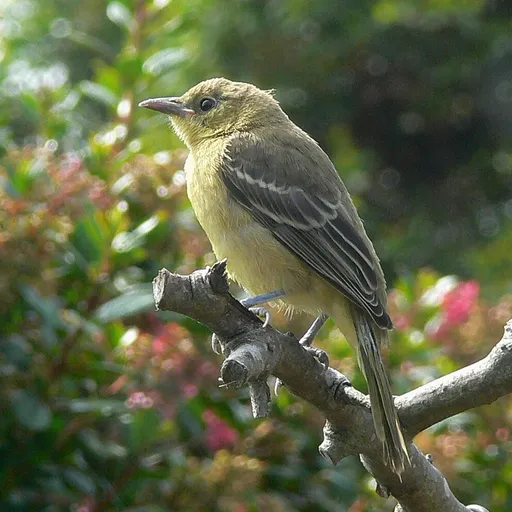
- Plumage: Males display bright orange to pale yellow underparts with a black back, face, and tail, plus two white wing bars; females are olive-green with yellowish accents.
- Bill: Adults possess a curved, completely black bill.
- Song: The song is short, abrupt, and nasal, often lacking the whistling quality of other orioles and sometimes including mimicry of local species.
- Size: Medium-sized passerine.
Habitat
Breeding habitats consist of open areas with trees, particularly palms, across the Southwestern United States and northern Mexico. These birds migrate to Mexico's southwestern coast but are permanent residents in Baja California Sur, the Mexican east coast, and Belize, with occasional rare winter sightings in Southern California neighborhoods.
Diet
Diet includes insects, berries, and nectar, with a preference for caterpillars, beetles, wasps, and ants. They are acrobatic feeders that forage in trees and shrubs, often hanging upside down to access food. As nectar robbers, they pierce the base of flowers rather than assisting in pollination and frequently visit bird and hummingbird feeders for seeds.
Did you know?
The hooded oriole has been observed constructing duplex nests, a structural adaptation that circumvents parasitism by cowbirds. Some individuals in Arizona have been known to incorporate the songs of the Gila Woodpecker and Ash-throated Flycatcher into their own repertoire.
Sources
- Wikipedia · CC BY-SA 4.0
- Wikidata · CC0 1.0