
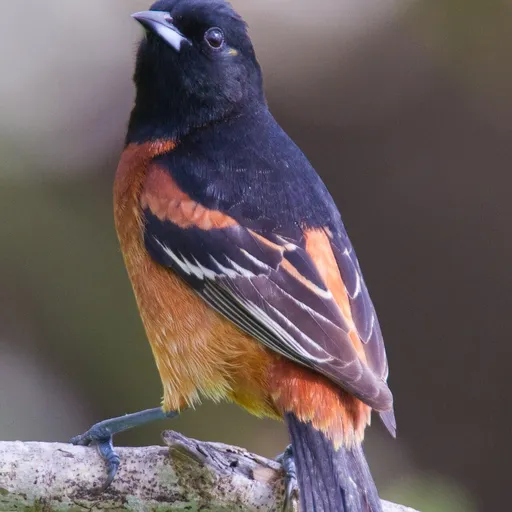
Orchard Oriole
Icterus spurius
Least Concern
Listen
XC1000601 · steve · Springer's Point Preserve (near Ocracoke), Hyde County, North Carolina, United States · CC BY-SA 4.0
Overview
The orchard oriole (Icterus spurius) is the smallest species of icterid bird, known for its seasonal migration across the Americas. It is classified as Least Concern on the IUCN Red List.
Identification
- Length of 5.9–7.1 inches with a wingspan of 9.8 inches.
- Adult males feature chestnut or ochre underparts and rumps with the rest of the plumage being black.
- Females and juveniles display olive-green upper parts and yellowish breasts and bellies.
- The bill is pointed and black with some blue-gray at the base of the lower mandible.
Habitat
Breeding habitats consist of semi-open areas with deciduous trees, specifically shaded trees within parks along lakes and streams in eastern North America and parts of Mexico. Winter ranges extend from central Mexico through northern Colombia and northwestern Venezuela.
Diet
Diet varies by season, consisting of insects and spiders during the breeding season, while winter diets include fruit, nectar, insects, and seeds. Fruit consumption increases as the season changes and passes quickly through the digestive tract.
Did you know?
The scientific name spurius originates from the species being originally misidentified as female Baltimore orioles, and they are frequently mistaken for New World warblers.
Sources
- Wikipedia · CC BY-SA 4.0
- Wikidata · CC0 1.0