
Mississippi Kite
Ictinia mississippiensis
Least Concern
Overview
The Mississippi kite (Ictinia mississippiensis) is a small bird of prey known for its narrow, pointed wings and graceful, floating flight. It is currently classified as a species of Least Concern, with an increasing population and an expanding breeding range across the United States.
Identification
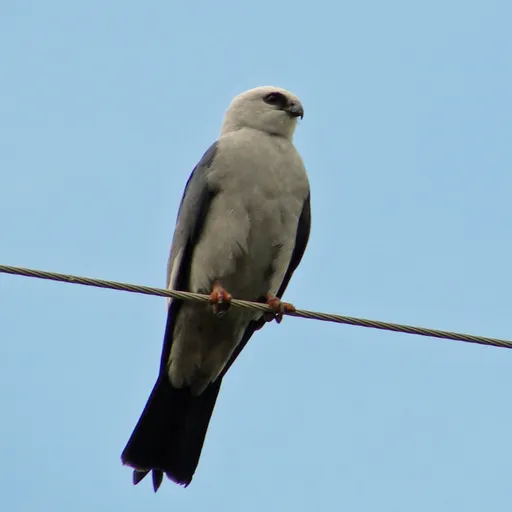
- Greyish-blue plumage with a very light grey head and a pale underbelly.
- Bright red eyes that are particularly striking in the field.
- Approximately 30 to 37 cm in length with a wingspan of around 90 cm.
- Narrow, pointed wings and a forked tail that give the appearance of floating in the air.
Habitat
Summer breeding territories are concentrated in the Central and Southern United States, with the southern Great Plains acting as a stronghold. The species has expanded westward into shelterbelts and hedgerows, and now frequently nests in urban areas of the western south-central states. During winter, it migrates to subtropical and temperate regions of South America, particularly northern Argentina and southern Brazil.
Diet
The diet consists mainly of larger invertebrates, such as cicadas, crickets, grasshoppers, and locusts, which the bird captures in flight. It also opportunistically feeds on small vertebrates, including passerine birds, amphibians, reptiles, and small mammals. Kites typically hunt from a low perch, often patrolling around livestock herds to catch insects stirred up from the ground.
Did you know?
Mississippi kites breed more successfully in human-populated urban areas than in rural locales, as there are fewer arboreal predators to threaten their nests. They are protected under the Migratory Bird Treaty Act, which can cause them to be considered a nuisance when they choose to roost on golf courses or school grounds.
Sources
- Wikipedia · CC BY-SA 4.0
- Wikidata · CC0 1.0