
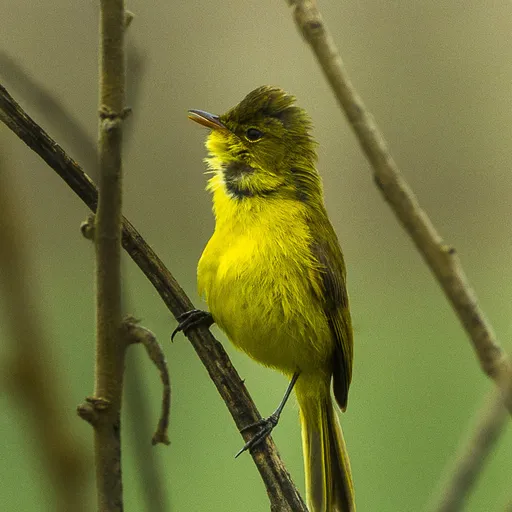
African Yellow Warbler
Iduna natalensis
Least Concern
Overview
The African yellow warbler, also known as the Natal yellow warbler or dark-capped yellow warbler, is a medium-sized species within the family Acrocephalidae. It is a resident of rank vegetation and is currently classified as Least Concern on the IUCN Red List.
Identification
- Medium-sized warbler measuring 13 cm in length and weighing between 10 and 15 g, with yellowish-brown upperparts and a bright yellow underparts that may have an olive wash on the sides.
- Wings feature brown feathers edged with yellow, while the bill is pale on the upper mandible and blackish on the lower, with blackish legs.
- Song consists of a rapid series of throaty and varied notes preceded by raspy notes, described as "chip-chip-chip- whee-lee-wheeo", with an alarm call of a sharp "tsk" or "chirr".
- Females possess duller underparts, and juveniles appear buffier than adult males.
Habitat
Found in rank vegetation, reeds, overgrown waterside vegetation, and forest edges, particularly where these are integrated with wetter vegetation. Its range spans from Nigeria and Gabon in the west to East and Southern Africa, including regions such as the Democratic Republic of Congo, Ethiopia, Kenya, Tanzania, Zambia, Zimbabwe, Mozambique, South Africa, and Eswatini.
Diet
Forages low in the vegetation, either singly or in pairs, to glean prey such as caterpillars from leaves and branches. It also hawks termite alates by sallying into the air from a perch and returning to feed on captured prey.
Did you know?
The bird is described as rather secretive, often diving into cover and creeping away in a mouse-like fashion if disturbed.
Sources
- Wikipedia · CC BY-SA 4.0
- Wikidata · CC0 1.0