
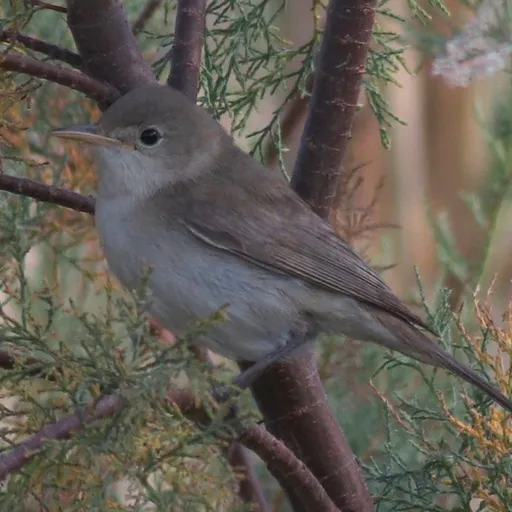
Western Olivaceous Warbler
Iduna opaca
Least Concern
Listen
XC1143452 · Tanguy Loïs · Comarca Metropolitana de Sevilla (near Poblado de Alfonso XIII), Sevilla, Andalucía, Spain · CC BY-SA 4.0
Overview
The western olivaceous warbler, also known as the isabelline warbler, is a small passerine bird classified in the tree warbler genus Iduna within the family Acrocephalidae. It is a distinct species that was formerly grouped with the eastern olivaceous warbler but is now recognised as separate due to modern taxonomic developments.
Identification
- A medium-sized warbler with a body length of 13–14 cm, featuring a plain pale brown back and whitish underparts.
- Possesses a strong, pointed bill and grey legs; young birds display a more buff-coloured belly.
- Larger than the eastern olivaceous warbler with a browner tinge to the upperparts and a proportionally larger bill.
- The song is described as a fast, nasal babbling.
Habitat
This species inhabits dry open country, including cultivation areas that contain bushes or some trees. It breeds in the Iberian Peninsula and North Africa, specifically occurring as a passage migrant in southeast Morocco, and winters in sub-Saharan Africa. It is classified as a rare vagrant to northern Europe.
Diet
Like most warblers, the western olivaceous warbler is insectivorous. It forages by searching for food at different heights and notably does not wiggle its tail, or does so uncommonly.
Did you know?
Unlike many of its relatives, this species does not wiggle its tail, or does so only uncommonly.
Sources
- Wikipedia · CC BY-SA 4.0
- Wikidata · CC0 1.0