
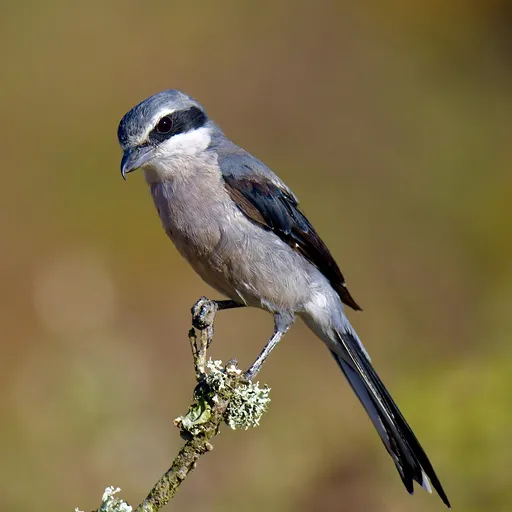
Iberian Grey Shrike
Lanius meridionalis
Vulnerable
Overview
The Iberian grey shrike is a species of shrike endemic to southwestern Europe that is closely related to the great grey shrike. It was previously considered conspecific with the great grey but is now recognised as a separate species based on phylogenetic studies. Currently, the species is listed as Vulnerable on the IUCN Red List.
Identification
- Lanius meridionalis has much darker grey plumage above, particularly on the crown, nape and mantle, with a greyish-pink hue to the breast and belly.
- It features a wider black mask and a clearer white supercilium than similar species.
- The bird has a moderately large white patch on the primaries but lacks white on the secondaries.
- It may possess a slightly larger head, a stronger bill and a thinner tail compared to great grey shrikes from northern Europe.
Habitat
Endemic to southwestern Europe, the species occurs across most of the Iberian Peninsula and extends into southern France. It breeds in open habitats such as open, dry plains, typically on limestone heath or stony grassland featuring some scrub and scattered trees.
Diet
This medium-sized passerine feeds on large insects, small birds and rodents. It hunts from prominent perches and impales corpses on thorns or barbed wire as a 'larder'.
Did you know?
The genus name Lanius is derived from the Latin word for 'butcher', a term reflecting the feeding habits of shrikes. Additionally, the common English name 'shrike' originates from the Old English word scríc, meaning 'shriek', which refers to the bird's shrill call.
Sources
- Wikipedia · CC BY-SA 4.0
- Wikidata · CC0 1.0