
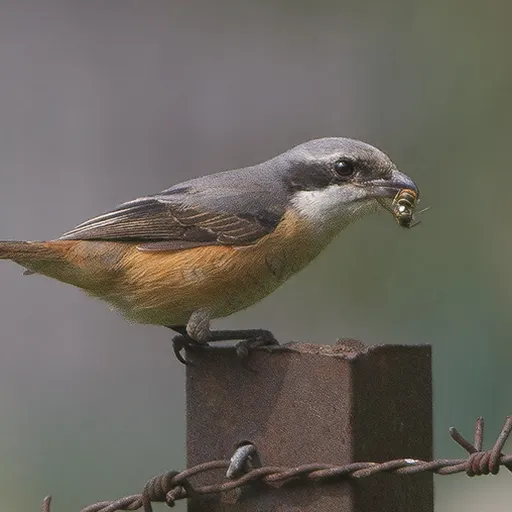
Grey-backed Shrike
Lanius tephronotus
Least Concern
Overview
The grey-backed shrike (Lanius tephronotus) is a bird in the family Laniidae inhabiting South-east Asia. It is closely allied with L. schach but differs in morphology and is classified as Least Concern due to its large range and stable population trends.
Identification
- Body length 21–25 cm with a long tail, weighing 39–54 g.
- Dark grey crown to nape and upperparts with a small rufous rump patch; facial mask and black forehead are prominent in the nominate race.
- Upper wings are black with pale rufous or whitish fringes on the coverts; tail is chestnut-brown tipped buffish.
- Voice includes a rough, breathing-like call and a subdued, musical breeding song featuring mimicry of other bird calls.
Habitat
Breeds at high elevations, up to 4500 m, in forest clearings, plateau plains, and mountain meadows dotted with small trees or bushes. At lower altitudes or during non-breeding seasons, it occupies agricultural valleys, gardens, and abandoned cultivation near human settlements.
Diet
Feeds mostly on insects such as moths, crickets, grasshoppers, and caterpillars, as well as small vertebrates like lizards, frogs, and small rodents. It acts as a sit-and-wait predator, perching on high grasses, bushes, or trees to hunt prey on the ground or occasionally hawking insects in the air, with a preference for impaling prey.
Did you know?
Grey-backed shrikes often select nesting and foraging sites close to human settlements because these areas provide better foraging substrates and safer havens from large predators.
Sources
- Wikipedia · CC BY-SA 4.0
- Wikidata · CC0 1.0