
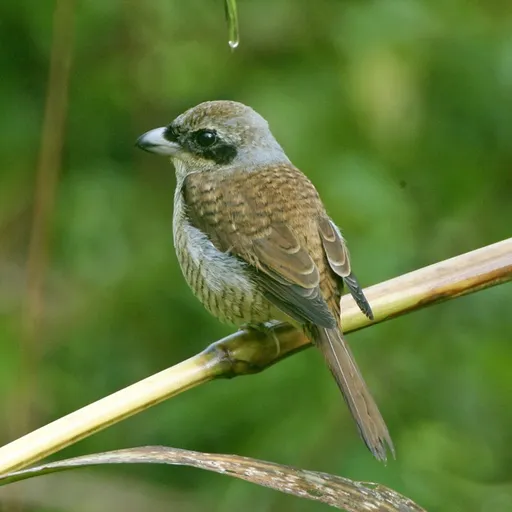
Tiger Shrike
Lanius tigrinus
Least Concern
Overview
The tiger shrike, also known as the thick-billed shrike, is a small passerine bird in the shrike family Laniidae. It is characterised by its shy and solitary nature, making it less conspicuous than most other shrikes, and is currently classified as Least Concern on the IUCN Red List.
Identification
- A stocky bird measuring 17–19 cm in length with a thick, blue-black bill featuring a black tip.
- Adult males display a grey head with a black mask and white underparts, while their upperparts are reddish-brown with distinct dark bars resembling a tiger's pattern.
- Females are duller and browner than males, possessing a less extensive black mask, a narrow white stripe above the eye, and buff-white flanks with black barring.
- The song is described as a musical warbling, accompanied by harsh calls including a loud territorial call, a chattering alarm call, and a softer trilling call.
Habitat
This species breeds in temperate regions of eastern Asia within deciduous or mixed woodland, forest edges, and farmland with scattered trees. It migrates to winter in the tropical and subtropical regions of south-east Asia, where it frequents forest clearings, cultivated land, mangroves, and gardens.
Diet
The tiger shrike is a predatory bird that feeds mainly on insects such as grasshoppers, crickets, beetles, bugs, butterflies, and moths, as well as other arthropods, small birds, and lizards. It typically hunts from a perch at the forest edge or forages among branches and leaves to locate prey.
Did you know?
Like other members of the Lanius genus, which is named from the Latin word for 'butcher', the tiger shrike exhibits the habit of impaling and storing its prey.
Sources
- Wikipedia · CC BY-SA 4.0
- Wikidata · CC0 1.0