
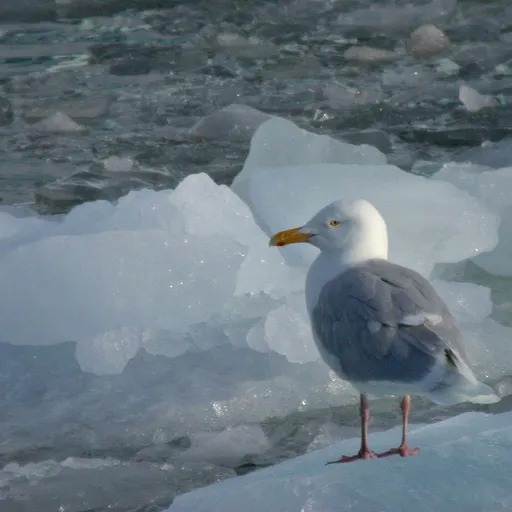
Glaucous Gull
Larus hyperboreus
Least Concern
Overview
The glaucous gull (Larus hyperboreus), also known as the burgomaster, is a large and powerful seabird and the second-largest gull species in the world. It is characterised by its very pale plumage and lack of black on the wings or tail.
Identification
- Very pale grey above in adults, with a thick yellow bill; no black on the wings or tail.
- Considerably larger, bulkier, and thicker-billed than the similar Iceland gull, sometimes matching the size of the great black-backed gull.
- Juveniles are very pale grey with a pink and black bill.
- Call is a deep, "laughing" cry similar to that of the herring gull.
Habitat
Breeds in Arctic regions of the Northern Hemisphere on coasts and cliffs, often colonially or singly. Winters south to the shores of the Holarctic, ranging as far south as the British Isles, the northernmost states of the United States, and the Great Lakes, with rare sightings in the southern USA and northern Mexico.
Diet
As an omnivore, it feeds on fish, insects, molluscs, starfish, offal, scraps, eggs, small birds, small mammals, carrion, seeds, berries, and grains.
Did you know?
Some populations, such as those on Wrangel Island, have reportedly weighed an average of 2.32 kg for males and 2.1 kg for females, which would make the glaucous gull the heaviest gull and shorebird in the world if accurate.
Sources
- Wikipedia · CC BY-SA 4.0
- Wikidata · CC0 1.0