
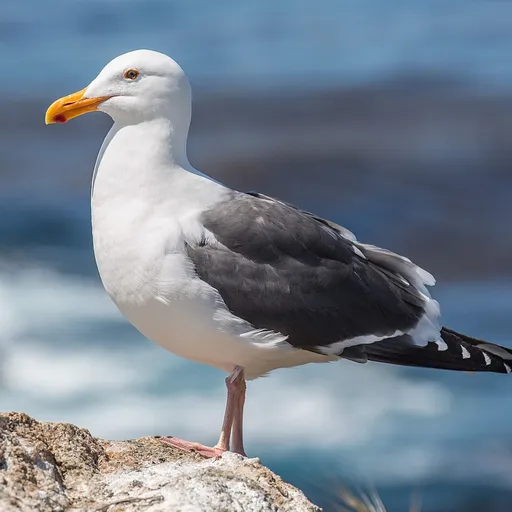
Western Gull
Larus occidentalis
Least Concern
Overview
The western gull (Larus occidentalis) is a large, white-headed gull that resides on the west coast of North America and the Pacific Ocean. Its range extends from British Columbia, Canada, to Baja California, Mexico.
Identification
- Length: 55 to 68 cm; wingspan: 130 to 144 cm; weight: 800 to 1,400 g.
- White head and body with a dark grey mantle; head generally remains white year-round.
- Large, bulbous-tipped yellow bill featuring a red subterminal spot.
- Call is bright, piercing, and repetitive.
Habitat
The western gull is a year-round resident in California, Oregon, Baja California, and southern Washington, with migrations to northern Washington, British Columbia, and Baja California Sur for the non-breeding season. It rarely ventures more than 100 miles inland and nests on offshore islands, rocks along the coast, and islands inside estuaries.
Diet
Western gulls feed on the surface of pelagic and intertidal environments, taking fish, invertebrates, seal and sea lion carcasses, roadkill, and human food refuse. They are known for predatory behaviour, killing ducklings and pigeons, and pilfering milk from elephant seals.
Did you know?
Western gulls have become a nuisance to the San Francisco Giants baseball team, swarming Oracle Park during late innings to defecate on fans and eat leftovers, with the timing of their arrival remaining unexplained.
Sources
- Wikipedia · CC BY-SA 4.0
- Wikidata · CC0 1.0