
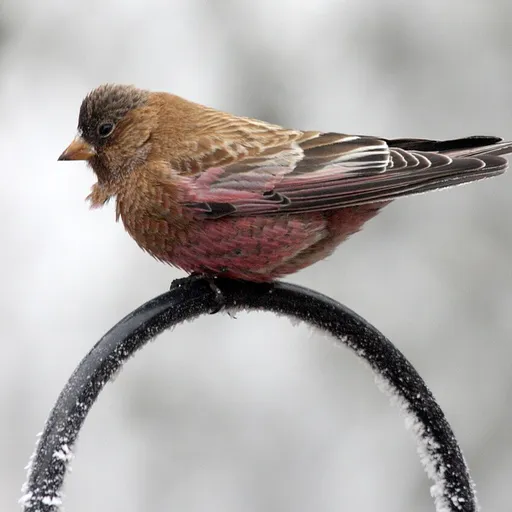
Brown-capped Rosy Finch
Leucosticte australis
Endangered
Overview
The brown-capped rosy finch (Leucosticte australis) is a medium-sized finch endemic to North America, specifically found in the central Rocky Mountains. Although listed as Endangered on the IUCN Red List, a 2023 analysis indicates the population is healthy and significantly larger than previous estimates.
Identification
- Plumage features brown heads, backs, and breasts, with pink bellies, rumps, wings, and tails; the pink coloration is more pronounced in males.
- The forehead is black or grayish brown, contrasting with the rest of the head.
- Bill color changes seasonally, appearing yellow in winter and black in summer.
- Physical structure includes short black legs and a long forked tail.
Habitat
Breeding habitat consists of mountain peaks in the central Rocky Mountains of the United States, where cup nests are built in cliff cavities or reused from cliff swallows. These birds are also found in alpine snowfields and migrate short distances to lower elevations during the winter.
Diet
These finches forage on the ground, primarily consuming seeds from weeds and grasses, though they may also fly to catch insects in flight. They often feed in small flocks alongside other rosy finches and can be found at feeders, particularly in winter.
Did you know?
At one time, the three North American rosy finches were considered to be a single species rather than distinct entities. A 2023 analysis revealed that the population of this bird is three times larger than estimated in 2016, contradicting earlier fears of decline.
Sources
- Wikipedia · CC BY-SA 4.0
- Wikidata · CC0 1.0