
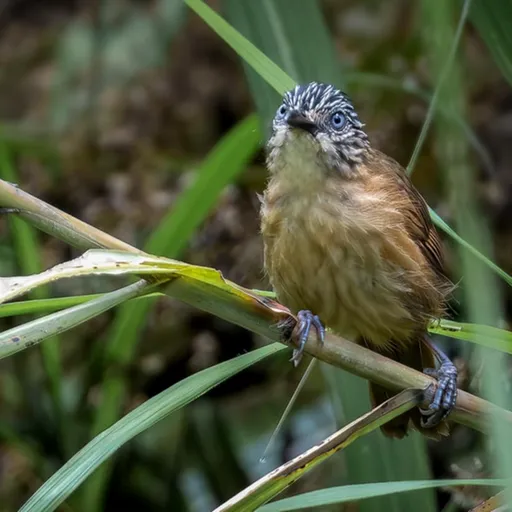
Brown Tit-Babbler
Macronus striaticeps
Least Concern
Overview
The brown tit-babbler, Macronus striaticeps, is a species of bird in the family Timaliidae that is endemic to the Philippines. It is classified as a least-concern species by the IUCN, although its population is decreasing due to habitat loss from logging, agricultural conversion, and mining.
Identification
- Most distinctive in the Sulu Archipelago subspecies, which features a brown crown, less streaking, and uniformly buffy underparts.
- Generally found in small parties within the middle and lower storeys of tangled vegetation.
Habitat
This species inhabits primary and secondary tropical moist lowland forest, scrubland, and tropical moist montane forest up to 1,770 meters above sea level. Its range is restricted to the Philippines, with specific subspecies found on islands such as Basilan, Dinagat, Siargao, Mindanao, Bohol, Biliran, Leyte, and Samar.
Diet
The brown tit-babbler is presumed to feed on invertebrates and vegetable matter. It forages in small parties in the middle and lower storeys of tangled vegetation and can also join mixed flocks with other species.
Did you know?
Breeding occurs from March to July, during which the bird constructs a large loose ball nest of grass and leaves placed in a clump of grass or near the ground. The clutch typically consists of 2 to 3 creamy white or pure white eggs marked with reddish brown speckles.
Sources
- Wikipedia · CC BY-SA 4.0
- Wikidata · CC0 1.0