
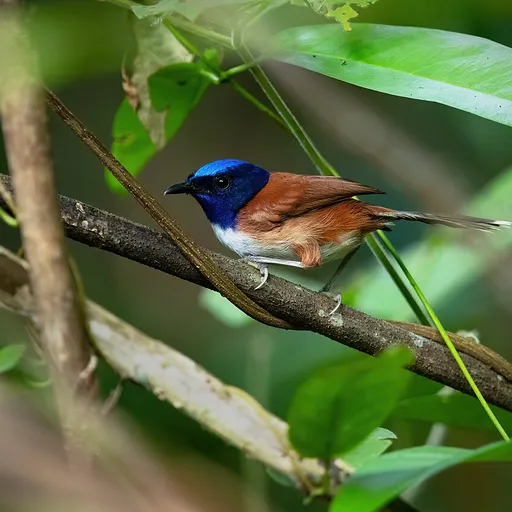
Emperor Fairywren
Malurus cyanocephalus
Least Concern
Overview
The emperor fairywren (Malurus cyanocephalus) is the largest species of fairywren, belonging to the Australasian wren family Maluridae. It is classified as a species of Least Concern on the IUCN Red List. This bird is characterized by significant sexual dimorphism and is found across New Guinea and nearby islands.
Identification
- Males display blue and black plumage, with light royal blue crowns in the nominate subspecies, black foreheads, and deep turquoise-blue upperparts.
- Females resemble males on the head but have rusty brown upperparts, white underparts, deep blue throats, and black tails tipped with white.
- Measuring 13–16 cm in length and weighing 12–17 g, it features a black bill and dark grey-brown legs in males, with lighter mid-brown legs in females.
- Vocalisations include a song reel preceded and followed by sets of three notes, along with contact calls sounding like "tst-tst-tst" and an alarm call of "tschik".
Habitat
Native to New Guinea and the Aru Islands, the emperor fairywren inhabits tropical and subtropical moist lowland forests, wetlands, and degraded former forests. It thrives in dense secondary growth, forest openings, riversides, and even disturbed habitats such as overgrown gardens and parks.
Diet
The emperor fairywren feeds mainly on arthropods, including beetles, bugs, moths, grasshoppers, and spiders. Foraging is conducted in noisy family groups, where insects are picked from leaves, palm fronds, and branches within 1 m of the ground.
Did you know?
Despite being socially monogamous and remaining paired throughout the year, emperor fairywrens are sexually promiscuous and practice cooperative breeding, with former chicks often acting as helpers to raise the young.
Sources
- Wikipedia · CC BY-SA 4.0
- Wikidata · CC0 1.0