
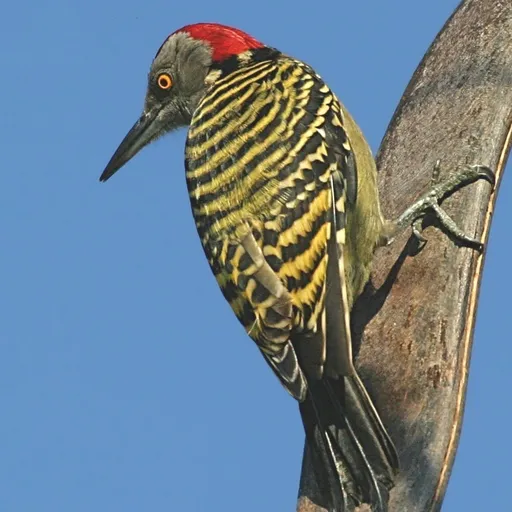
Hispaniolan Woodpecker
Melanerpes striatus
Least Concern
Overview
The Hispaniolan woodpecker (Melanerpes striatus) is a medium-sized woodpecker endemic to the Caribbean island of Hispaniola, shared between the Dominican Republic and Haiti. It is classified as a species of Least Concern on the IUCN Red List.
Identification
- A gold and black barred bird measuring 22 to 28 cm in length, with a long, slender, grey beak and grey legs.
- Adult males possess a red crown and nape, while adult females have a black crown and red nape.
- Features yellow irises and is quite vocal, producing yapping, squeaking, rolling, and nasal calls, though it drums only occasionally.
Habitat
Primarily a woodland bird, it inhabits a wide variety of biomes across Hispaniola, including wet, dry, broadleaf, and coniferous forests. It also frequent plantations, cactus scrub, mangrove areas, swamps, grasslands, palm groves, wooded agricultural areas, and urban parks.
Diet
This omnivorous species forages on the sides of tree trunks in small, noisy groups, rarely coming to the ground. Its diet consists of insects, spiders, scorpions, lizards, fruit, seeds, grain, and sap, and it can catch flying insects in flight.
Did you know?
Unlike most woodpeckers, it is a highly social species where up to 26 pairs may nest in a single tree. The excavated nests are also reused by other species such as Hispaniolan amazons, parakeets, trogons, Antillean piculets, and golden swallows.
Sources
- Wikipedia · CC BY-SA 4.0
- Wikidata · CC0 1.0