
Gila Woodpecker
Melanerpes uropygialis
Least Concern
Overview
The Gila woodpecker (Melanerpes uropygialis) is a medium-sized woodpecker native to the desert regions of the southwestern United States and western Mexico. It is classified as a species of least concern globally, although populations in California are considered endangered.
Identification
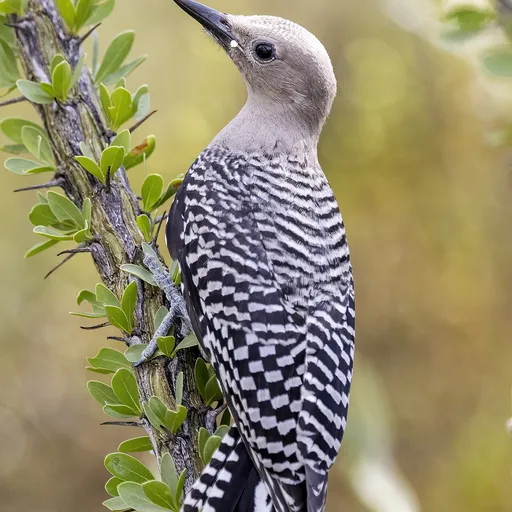
- The back and wings display a spotted and barred black and white zebra-like pattern, while the neck, throat, belly and head are greyish-tan.
- Males possess a small red cap on the top of the head, whereas females and juveniles lack this feature.
- The bird measures 8–10 in (20–25 cm) in length, with prominent white wing patches visible in flight and white bars on the central feathers of a dark tail.
- Its vocalisations include a rolling churr, distinct 'yip yip yip' and 'kee-u, kee-u, kee-u' calls, and a long, steady drumming sound.
Habitat
This species inhabits low desert scrub typical of the Sonoran Desert, as well as arroyos (washes) and small towns. In the United States, its range extends through southeastern California, southern Nevada, Arizona, and New Mexico.
Diet
Primarily insectivorous, Gila woodpeckers gain food by drilling into bark, but they are omnivorous and also consume fruits, nectar, seeds, lizards, eggs, worms, and even young chicks of small birds. They are known to visit human-placed hummingbird feeders to sip nectar.
Did you know?
Cavities excavated by Gila woodpeckers in saguaro cacti, known as 'boots', are later reused by a variety of other species, including the elf owl. This behaviour highlights the ecological importance of the species to the desert community.
Sources
- Wikipedia · CC BY-SA 4.0
- Wikidata · CC0 1.0