
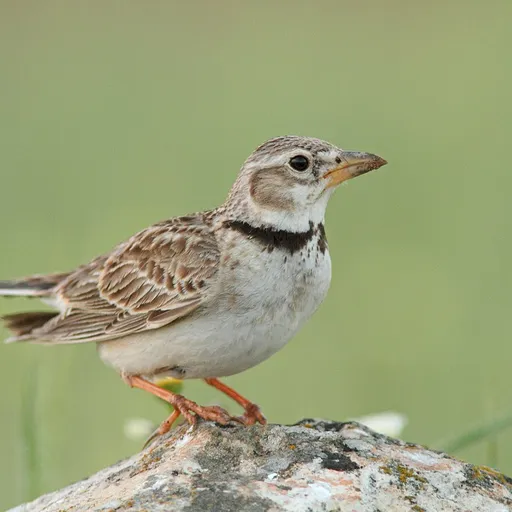
Calandra Lark
Melanocorypha calandra
Least Concern
Overview
The calandra lark (Melanocorypha calandra), also known as the European calandra-lark, is a large, robust passerine bird found in warm temperate regions. It breeds across the Mediterranean, extending eastwards through Turkey into northern Iran and southern Russia.
Identification
- Large, robust body size of 17.5–20 cm with an undistinguished appearance on the ground.
- Mainly streaked greyish brown upperparts and white underparts, featuring large black patches on the breast sides and a white supercilium.
- In flight, displays short, broad wings that are dark below and a short, white-edged tail.
- Song resembles a slower version of the skylark's call.
Habitat
This species inhabits open cultivation, steppe, and dry pastures, often preferring fallows, long-fallows, and field edges within its range. It occupies open plains ranging from true steppe with dense grass cover to extensive dry cereal cultivations in the Mediterranean Basin.
Diet
The calandra lark has a seasonal diet, feeding mostly on insects during the summer breeding season and switching to seeds and grass shoots in the winter. It forages in open areas where these food sources are available.
Did you know?
Due to its highly musical song, the calandra lark was formerly a popular cagebird in its range, inspiring the Tuscan proverb "Canta come una calandra" to describe someone who sings well.
Sources
- Wikipedia · CC BY-SA 4.0
- Wikidata · CC0 1.0