
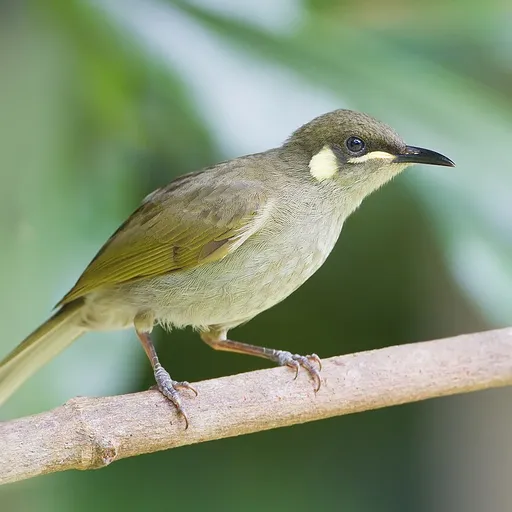
Yellow-spotted Honeyeater
Meliphaga notata
Least Concern
Overview
The yellow-spotted honeyeater (Meliphaga notata), also known as the lesser lewin, is a passerine bird in the family Meliphagidae endemic to northern Queensland. It is currently classified as Least Concern on the IUCN Red List, with a stable population and a range exceeding 110,000 square kilometres.
Identification
- Plumage: Olive-brown on the upperparts and olive-grey below, featuring brighter yellow areas on the head and a distinct yellow patch behind the eyes.
- Size: Small bird measuring 16 to 20 cm in length with a wingspan of approximately 8 to 9 cm, weighing between 23 and 30 grams.
- Features: Brown legs, feet, eyes, and bill.
- Call: Loud and metallic, described as a high-pitched rattling song consisting of four to five 'ee-yeu' repetitions, sometimes likened to a machine gun rattle.
Habitat
Found in tropical rainforests and open forests in northeastern Australia, specifically between Mackay and the northern Cape York Peninsula. It typically inhabits elevations of 200 metres or greater, though it has been observed as high as 1,200 m and occasionally visits suburbs or cities with sufficient tree cover.
Diet
The species feeds on insects, nectar, and fruit. It typically perches with its body held partially horizontal while foraging.
Did you know?
Although primarily a forest dweller, this species has been observed in urban environments that use local plants for landscaping. It is known to be aggressive, often interacting with other bird species such as the graceful honeyeater.
Sources
- Wikipedia · CC BY-SA 4.0
- Wikidata · CC0 1.0