
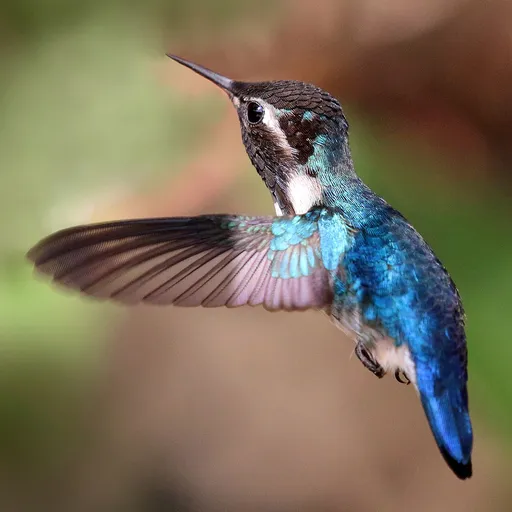
Bee Hummingbird
Mellisuga helenae
Near Threatened
Overview
The bee hummingbird (Mellisuga helenae), also known as the zunzuncito, is a species of hummingbird native to Cuba that holds the title of the smallest known living bird. Listed as Near Threatened on the IUCN Red List, it is endemic to the Cuban archipelago.
Identification
- Males feature a green pileum, iridescent scarlet gorget with elongated lateral plumes, and bluish upper parts.
- Females are bluish green with pale grey underparts and white spots on the tips of their tail feathers.
- The bird appears rounded and plump rather than slender, with a slender, pointed bill.
- The call is described as a high-pitched, jumbled twitter, often heard from atop the highest trees in its territory.
Habitat
This species is endemic to the entire Cuban archipelago, including the main island and Isla de la Juventud. It generally inhabits areas of thick growth containing lianas and epiphytes, with populations fragmented across regions such as the mogotes of Pinar del Río and Zapata Swamp.
Diet
Feeding mainly on nectar from flowers, the bee hummingbird moves its tongue rapidly to consume up to half its body weight in food each day. It occasionally eats insects and spiders and may visit 1,500 flowers in a single day, acting as an important pollinator.
Did you know?
Due to the classification of birds as living theropod dinosaurs, the bee hummingbird is technically the smallest known dinosaur ever recorded in the fossil or living record.
Sources
- Wikipedia · CC BY-SA 4.0
- Wikidata · CC0 1.0