
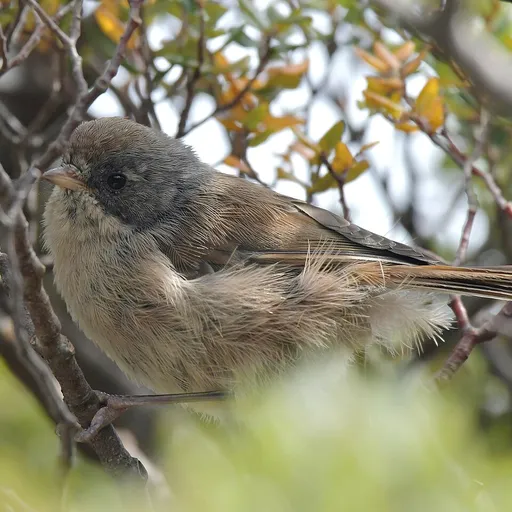
Pipipi
Mohoua novaeseelandiae
Least Concern
Overview
The pīpipi, also known as the brown creeper, is a small passerine bird endemic to the South Island, Stewart Island, and surrounding islands in New Zealand. This species is currently classified as Least Concern on the IUCN Red List, despite historical declines caused by habitat loss and predation.
Identification
- Plumage features a warm mix of brown and chestnut on the upper parts, with noticeably paler brown lower sections and a head marked by patches of chestnut and dark brown.
- A distinct whiteish eye stripe serves as a key marking, accompanied by a long, frayed tail with a dark bar at the tip.
- Legs and beak are pinkish or grey-brown, and the bird measures approximately 13 cm in length, with males averaging 13.5 g and females 11.0 g.
- Vocalisations include a conversational song that is relatively indistinct and raspy, often making the bird harder to identify by sound alone.
Habitat
Found widely but patchily across New Zealand south of Cook Strait, the pīpipi inhabits a diverse range of environments including native beech and podocarp forests, exotic plantations, regenerating scrub, and river flats. Their distribution extends from sea level to the treeline, with a preference for areas west and north of the Southern Alps as well as Fiordland, and they are common on offshore islands such as Codfish Island, where they are particularly abundant.
Diet
As specialist insectivores, they primarily forage for invertebrates such as beetles, moths, spiders, flies, and caterpillars, while also consuming ripe fruits from natives like Coprosma during autumn. They glean food from small branches and leaves, often hanging upside down using their strong legs and toes, and rarely forage on the ground.
Did you know?
Brown creepers are the main host for the long-tailed cuckoo in the South Island and Stewart Island, sometimes feeding chicks much larger than themselves despite having a high rate of egg rejection.
Sources
- Wikipedia · CC BY-SA 4.0
- Wikidata · CC0 1.0