
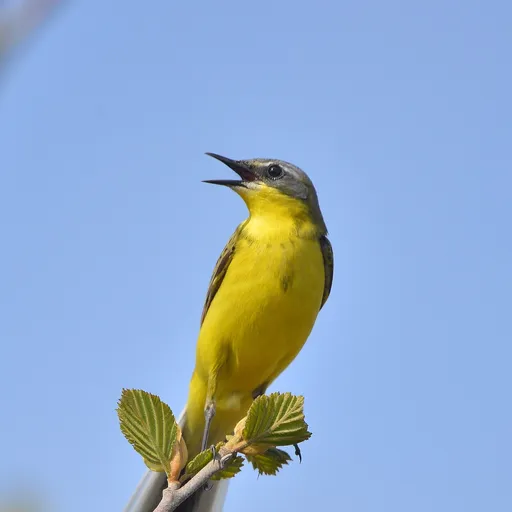
Eastern Yellow Wagtail
Motacilla tschutschensis
Least Concern
Listen
XC930654 · Jochem Verweij · Ögiy, O'giinuur, Arkhangai, Mongolia · CC BY-SA 4.0
Overview
The eastern yellow wagtail (Motacilla tschutschensis) is a small passerine bird in the family Motacillidae, classified as a separate species from the western yellow wagtail following genetic analysis in 2003. It is listed on the IUCN Red List as a species of Least Concern.
Identification
- Slender, 15–16 cm long bird with a long, constantly wagging tail.
- Breeding males are olive-green above and yellow below; other plumages may be diluted by white.
- Black bill and legs with a long, not strongly curved hind claw, which distinguishes it reliably from the western yellow wagtail.
- Call is a high-pitched zrri or jeet, shriller and more rasping than that of western yellow wagtails.
Habitat
This species breeds in the eastern Palearctic and has a foothold in North America in Alaska. It inhabits open country near water, such as wet meadows. Most individuals migrate to south-east Asia and Australia in winter, but the non-breeding range extends as far west as eastern India and Sri Lanka.
Diet
The eastern yellow wagtail is insectivorous. It nests in tussocks, laying 4–8 speckled eggs.
Did you know?
Since the advent of easier DNA testing of droppings, the species has proved to be a surprisingly frequent late autumn and winter vagrant in western and northwestern Europe, with ten or more records in some autumns in both Britain and Sweden, including multiple cases of birds overwintering.
Sources
- Wikipedia · CC BY-SA 4.0
- Wikidata · CC0 1.0