
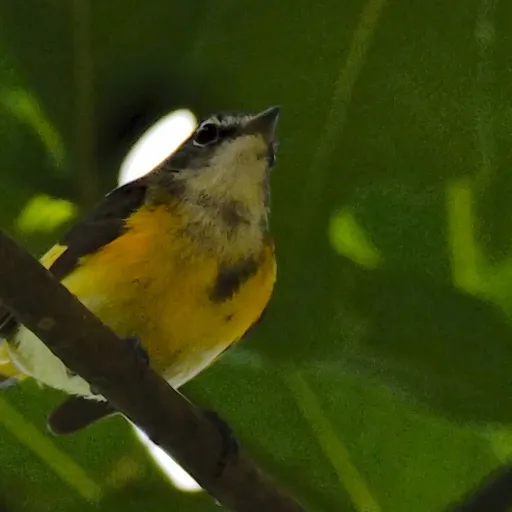
White-lored Warbler
Myiothlypis conspicillata
Near Threatened
Overview
The white-lored warbler is a Near Threatened bird in the New World warbler family that is endemic to the Sierra Nevada de Santa Marta in Colombia. It is a sedentary species that inhabits humid premontane and montane forests, as well as secondary growth and shade coffee plantations.
Identification
- Length of approximately 14 cm with a weight of about 14 g, featuring uniform plumage across sexes.
- Mostly gray head with a bright yellow to orange crown stripe bordered in black, blackish lores, and a distinctive white streak joining a wide broken eye-ring.
- Olive green upperparts and wings, with yellow underparts washed in yellow-olive on the flanks.
- Brown irises, a dark gray bill, and pale orange legs and feet.
Habitat
Found exclusively in the isolated Sierra Nevada de Santa Marta in northern Colombia, primarily at the edges and interior of humid premontane and montane forests. The species also utilises secondary forest and shade coffee plantations, ranging in elevation between 450 and 2,100 m but being most abundant between 1,000 and 1,500 m.
Diet
Although the diet has not been formally studied, it is believed to consist mostly or entirely of invertebrates. The bird usually forages in pairs or family groups in the forest understory below about 2 m, but may reach the canopy when joining mixed-species feeding flocks.
Did you know?
The species shows a certain degree of resilience to habitat transformation, as evidenced by its presence in shade coffee plantations despite significant habitat loss in its range. Its song consists of a short series of very high-pitched notes lasting less than five seconds.
Sources
- Wikipedia · CC BY-SA 4.0
- Wikidata · CC0 1.0