
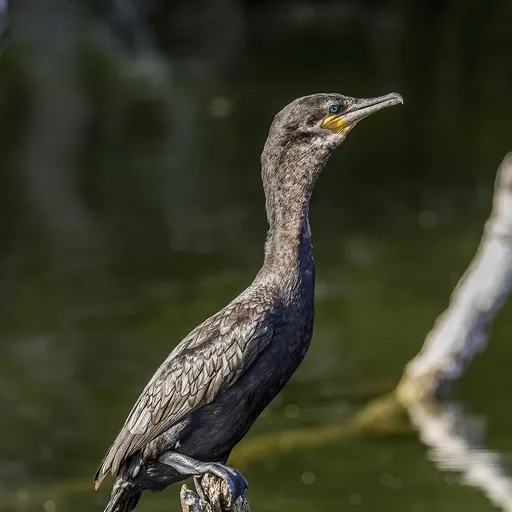
Neotropic Cormorant
Nannopterum brasilianum
Listen
XC463751 · Oliver Komar · El Zamorano, San Antonio de Oriente, Departamento de Francisco Morazán, Honduras · CC BY-SA 4.0
Overview
The neotropic cormorant, also known as the olivaceous cormorant, is a medium-sized cormorant found throughout the American tropics and subtropics. Known by the indigenous name biguá in southern South America, it is characterised by its slender build and long tail.
Identification
- 64 cm in length with a 100 cm wingspan, appearing small and slender compared to the larger double-crested cormorant.
- Adult plumage is mainly black with a yellow-brown throat patch, while the upper wings are somewhat grayer.
- Frequent posture includes holding the neck in an S-shape, and unlike other cormorants, it often perches on wires.
- Juveniles are brownish in color, and breeding adults display white tufts on the sides of the head and a white edge on the throat patch.
Habitat
This species inhabits both coastal areas, including some mangrove zones, and inland waters. Its range extends from the middle Rio Grande and the Gulf and Californian coasts of the United States, through Mexico and Central America, to southern South America, with breeding populations also present in the Bahamas, Cuba, and Trinidad.
Diet
The diet consists mainly of small fish, but also includes tadpoles, frogs, aquatic insects such as dragonfly nymphs, and shrimp. Inland birds feed on small, abundant fish like the sailfin molly, which are less than 10 cm in length. Foraging involves brief dives of 5 to 15 seconds, and groups may beat the water with their wings to drive fish into shallows.
Did you know?
In Peru, the neotropic cormorant is actively used by the Uru people for fishing.