
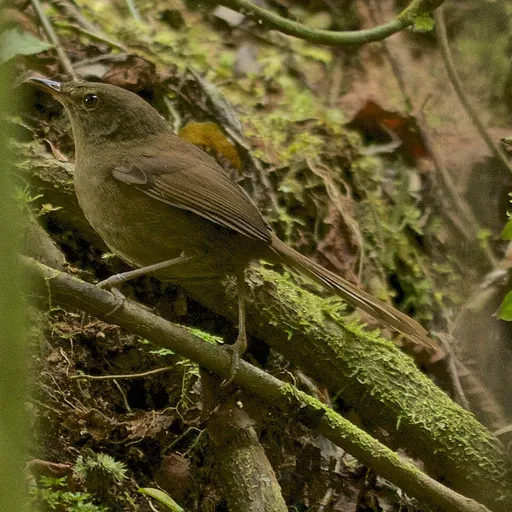
Malagasy Brush Warbler
Nesillas typica
Least Concern
Overview
The Malagasy brush warbler, also known as the Madagascar brush warbler, is a species of Old World warbler in the family Acrocephalidae. It is a widespread species found primarily in both Madagascar and the Comoro Islands, typically inhabiting forest undergrowth.
Identification
- Brown plumage with contrastingly white eyebrows
- Sleek and slim body with a low forehead and crown that is raised to form a slight crest
- Short and rounded wings with a long, brown bill
- Males have wingspans ranging from 62–70 mm, while females range from 58–67 mm
Habitat
The bird's natural habitats are subtropical or tropical dry forests, subtropical or tropical moist lowland forests, and subtropical or tropical moist shrubland. In eastern and northern Madagascar, it inhabits primary and degraded forests on calcareous substrates and gardens at all elevations, while in the Comoro Islands it is found exclusively in forested ridges above 400 meters among dense evergreens in Mohéli, and in dense undergrowth, plantations, coastal thickets, and wetlands in Anjouan.
Diet
The Malagasy brush warbler scavenges for food low to the ground in bushes and thick shrubs, walking and hopping to find insects such as spiders, cockroaches, beetles, tree bugs, and bees. It typically flies from bushes to sticks 3 m or less to the ground or hops on sticks and bushes on the ground.
Did you know?
Nests in Madagascar are built 0.2–0.6 m above the ground in thick bushes or grass tufts, made of woven dry grasses and lined with softer material such as flower petals, with small twigs and threads from caterpillar cocoons added to the outside.
Sources
- Wikipedia · CC BY-SA 4.0
- Wikidata · CC0 1.0