
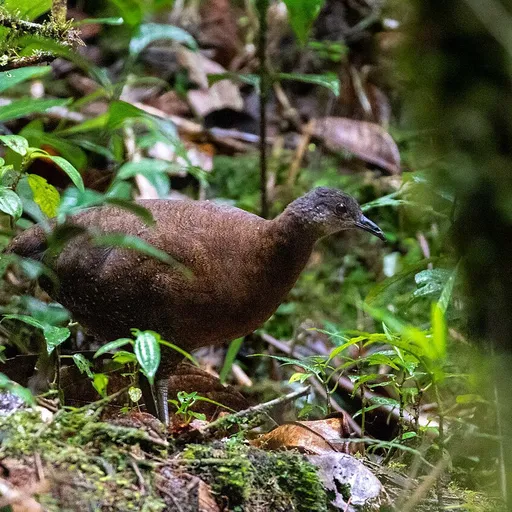
Hooded Tinamou
Nothocercus nigrocapillus
Least Concern
Overview
The hooded tinamou (Nothocercus nigrocapillus) is a type of ground bird found in the forests of Bolivia and Peru. It is classified as Least Concern on the IUCN Red List, with an estimated global extent of occurrence of 35,000 km².
Identification
- Light brown above, narrowly freckled with black.
- Paler below with dusky bars and a pale-spotted belly.
- Averages 33 cm (13 in) in length.
Habitat
This species is native to the Andes in Bolivia and Peru, where it inhabits montane moist forest at altitudes ranging from 1,550 to 3,000 m. Two subspecies exist: N. n. cadwaladeri in the Andes of northwestern Peru and N. n. nigrocapillus in the Andes of central Peru and Bolivia.
Diet
Like other tinamous, the hooded tinamou forages for fruit on the ground or in low-lying bushes. It also consumes small amounts of invertebrates, flower buds, tender leaves, seeds, and roots.
Did you know?
The male is solely responsible for incubating eggs that may originate from as many as four different females, subsequently raising the chicks for two to three weeks until they are independent.
Sources
- Wikipedia · CC BY-SA 4.0
- Wikidata · CC0 1.0