
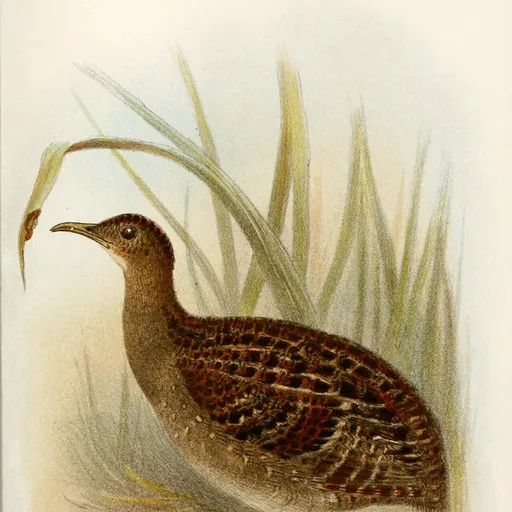
Andean Tinamou
Nothoprocta pentlandii
Least Concern
Listen
XC251250 · Niels Krabbe · Azuay: upper Yunguilla Valley, Ecuador · CC BY-SA 4.0
Overview
The Andean tinamou (Nothoprocta pentlandii) is a bird of the family Tinamidae, commonly found in high-altitude shrubland across the Andes of South America. As a member of the ratite group, it is notable for being the closest living relative of prehistoric flying birds, yet it retains the ability to fly, albeit weakly.
Identification
- Approximately 27 cm in length.
- Upper parts are greyish-brown to olive brown, barred with black and white.
- Breast is grey with white or buff spots; belly is buff or whitish.
- Crown is black, with mottled grey on the sides of the head and throat.
- Legs are yellow.
Habitat
The species inhabits subtropical and tropical shrubland at elevations ranging from 800 to 4,100 m. Its range extends through the Andes from southern Ecuador to central Chile, as well as in the Sierras de Córdoba in Argentina.
Did you know?
The scientific name pentlandii commemorates Joseph Barclay Pentland, an Irish Traveller. Tinamous are unique among ratites because they can fly, distinguishing them from other flightless relatives like ostriches and emus.
Sources
- Wikipedia · CC BY-SA 4.0
- Wikidata · CC0 1.0