
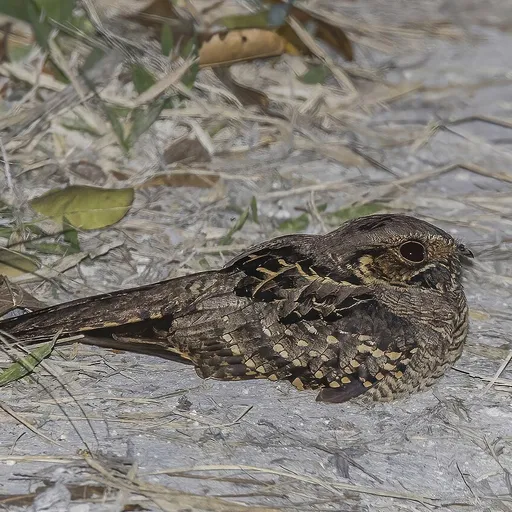
Pauraque
Nyctidromus albicollis
Least Concern
Listen
XC996858 · Rosa Elena Albornoz @rosaelena_naturaleza · Fila De Mariches (near Parroquia La Dolorita), Sucre, Distrito Capital, Venezuela · CC0 1.0
Overview
The pauraque, also known as the common pauraque, is a nightjar species and one of two birds in the genus Nyctidromus. It is a medium-sized, nocturnal bird that breeds across the subtropical and tropical regions of the New World, with most populations remaining resident year-round.
Identification
- Measures 8.7–11 in (22–28 cm) in length with a long tail and broad, rounded wings.
- Exhibits two colour morphs with variegated greyish-brown or rufous-brown plumage, featuring a buff eye-ring and facial stripe that contrast with reddish face sides.
- Males possess a white band near the wing tips and mainly white outer tail feathers, whereas these markings are narrower or more restricted in females.
- Males produce variable vocalisations including a whistled 'weeeow wheeooo' and soft 'puk puk' sounds, while females emit a rapid succession of whip sounds.
Habitat
Found in open woodland, grassland, scrubland, and crop fields, typically within the New World from southern Texas to the lower Paraná River region. It prefers mixed habitats that provide densely vegetated hiding places, such as forests, for daytime shelter and open landscapes for nocturnal hunting. Most populations are non-migratory, though those breeding in the United States may winter in eastern Mexico.
Diet
Feeds on insects caught in flight, typically by flycatching from a low perch or foraging over open ground. It is nocturnal, commencing flight at dusk to hunt in open landscapes.
Did you know?
The common name 'pauraque' is likely an onomatopoeia derived from the bird's distinctive wailing call. Additionally, its long legs with bare tarsi make it more terrestrial than most nightjars, often causing it to run rather than fly when disturbed.
Sources
- Wikipedia · CC BY-SA 4.0
- Wikidata · CC0 1.0