
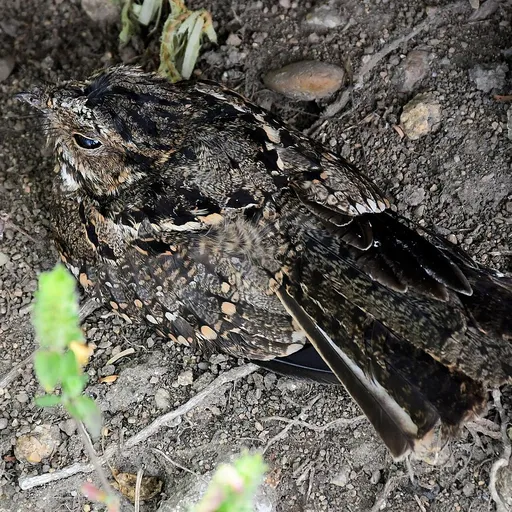
Anthony's Nightjar
Nyctidromus anthonyi
Least Concern
Overview
Anthony's nightjar (Nyctidromus anthonyi), also known as the scrub nightjar, is a species of nightjar in the family Caprimulgidae. It is classified as Least Concern by the IUCN, with a population believed to be increasing, possibly due to the clearing of forest and dense scrub.
Identification
- Males and females weigh approximately 35–37 g, with males having greyish brown upperparts featuring buff speckles and blackish brown streaks, along with a broad tawny buff collar on the nape.
- The lower throat is white, the breast is greyish brown with buff bars, and the belly and flanks are buff with faint brown bars; the five outermost primary wing feathers show a white or buffy stripe in flight.
- The simple song consists of a "short treeow or keeLEEoo" sung from the ground or a low perch, accompanied by a "rolling quaqrr" and a soft "tuk tuk tuk" flight call.
Habitat
This species is found in coastal western Ecuador and northern Peru, inhabiting arid open woodlands, grasslands, and shrublands from sea level to 800 m elevation. It is generally sedentary but may make small movements in response to rains.
Diet
Active primarily at dusk and early evening, Anthony's nightjars capture insect prey in flight or by sallying from a branch, tending to forage over open or semi-open areas.
Did you know?
The breeding season, which appears to be concentrated between December and March, is tied to rainfall, and the bird lays its clutch of one to two eggs directly on the ground atop leaf litter.
Sources
- Wikipedia · CC BY-SA 4.0
- Wikidata · CC0 1.0