
Grey Francolin
Ortygornis pondicerianus
Overview
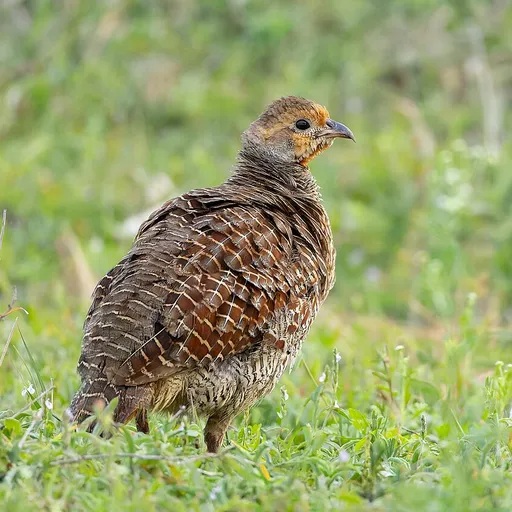
The grey francolin, Ortygornis pondicerianus, is a medium-sized ground-living bird found in the plains and drier parts of the Indian subcontinent and Iran. Formerly known as the grey partridge, it is distinguished from similar species by its barred plumage and pale face.
Identification
- Barred plumage throughout the body with a pale face and a thin black border around the pale throat.
- Males average 29–34 cm in length, while females are slightly smaller at 26–30 cm.
- Males may possess up to two spurs on the legs, whereas females usually lack them.
- Flight is short and weak, revealing a chestnut tail and dark primaries, after which the bird escapes into undergrowth.
Habitat
This species inhabits open cultivated lands, scrub forests, and low grass-covered ground, typically staying below 500 m altitude in India and 1,200 m in Pakistan. Its range extends south of the Himalayan foothills west to the Indus Valley and east to Bengal, including north-western Sri Lanka, with introduced populations on the Andaman and Chagos Islands.
Diet
The grey francolin forages on bare or low grass-covered ground for seeds, grains, and insects, particularly termites and beetles. On rare occasions, it may also take larger prey such as snakes.
Did you know?
Domesticated grey francolins in northern India can reach weights of 500–600 g, nearly double that of wild birds, and become so tame and confiding that they are compared to pet dogs. They have long been used for fighting, and their graceful running gait has inspired a common Indian poetic metaphor for a beloved's movement.