
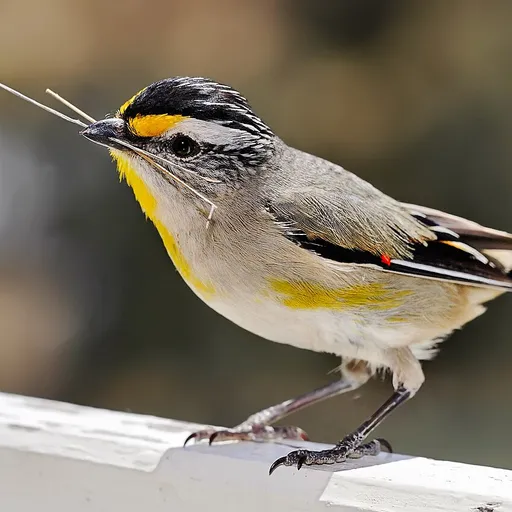
Striated Pardalote
Pardalotus striatus
Least Concern
Listen
XC925203 · Rob Nicholson · Wyaralong, Scenic Rim Regional, Queensland, Australia · CC BY 4.0
Overview
The striated pardalote (Pardalotus striatus) is the least colourful and most common of the four pardalote species. It is a very small, short-tailed bird that is more often heard than seen. Other common names include pickwick, wittachew and chip-chip.
Identification
- Crown is black, with white streaks in subspecies substriatus, striatus and ornatus.
- White eyebrow starts with a yellow mark near the beak.
- White stripe on the wing, with a yellow spot in the nominate race and a red dot in other subspecies.
- Olive backs, with males and females appearing similar while juveniles have duller plumage.
Habitat
Striated pardalotes occupy a vast range of habitat types from tall mountain rainforest to arid scrubland, although they favour eucalyptus forest and woodlands. They are found in all parts of Australia except some of the Western Australian deserts.
Diet
They feed on insects and insect larvae, usually foraging in the high foliage of eucalyptus trees but occasionally coming closer to the ground where lower shrubs are present. Feeding takes place in small groups.
Did you know?
Their call is described as a clear, sharp, musical witta-witta with the second part slightly lower, repeated regularly in intervals for long periods, accompanied by soft, low trills.
Sources
- Wikipedia · CC BY-SA 4.0
- Wikidata · CC0 1.0