
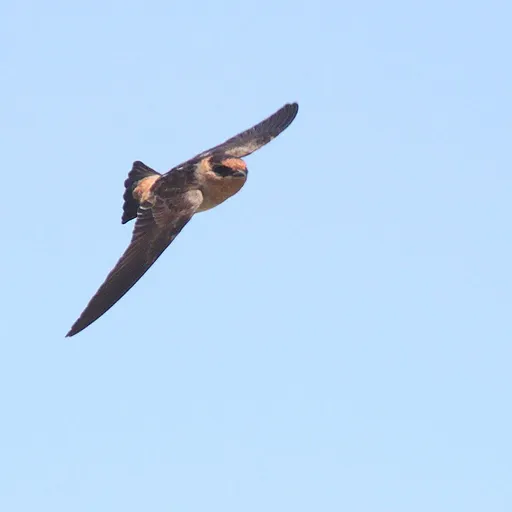
Cave Swallow
Petrochelidon fulva
Least Concern
Overview
The cave swallow (Petrochelidon fulva) is a medium-sized, squarish-tailed swallow native to the Americas, belonging to the same genus as the cliff swallow. It is primarily characterized by its preference for nesting and roosting in caves and sinkholes, though some subspecies utilize open cliff faces and building sides.
Identification
- Measures 12 to 14 cm in length with an average weight of 19 g.
- Displays grey-blue upperparts and a brown-tangerine forefront and throat.
- Sexual dimorphism is minimal, with both sexes similar in size, weight, and plumage.
Habitat
Breeding colonies are established in Mexico, the Greater Antilles, south-eastern New Mexico, Texas, Florida, and along the west coast of South America. North American subspecies typically inhabit caves, sinkholes, and man-made structures such as highway culverts, whereas South American subspecies prefer open areas like cliff faces and the sides of buildings.
Diet
Cave swallows feed on small to medium-sized flying insects throughout the day, foraging in loose flocks over open areas, open vegetation, and against cliff-faces. They drink water while in flight by skimming the surface of pools and rivers.
Did you know?
North American populations have experienced an 898% increase in breeding range in Texas between 1957 and 1999 due to the adoption of highway culverts and bridges as nesting sites, which allows for higher egg counts and nestling survival despite increased risks of flooding and predation compared to natural caves.
Sources
- Wikipedia · CC BY-SA 4.0
- Wikidata · CC0 1.0