
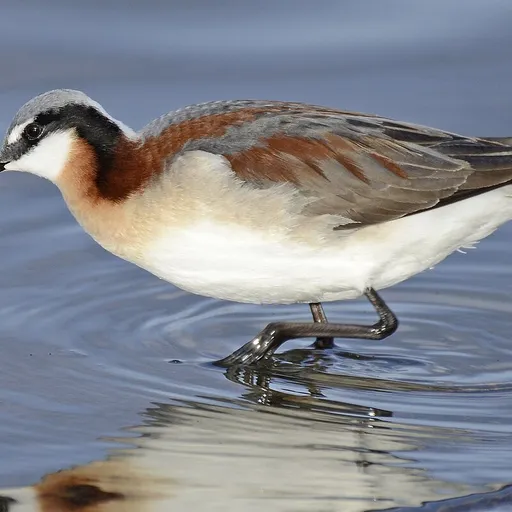
Wilson's Phalarope
Phalaropus tricolor
Overview
Wilson's phalarope (Phalaropus tricolor) is a small wader and the largest of the phalarope species. It breeds in the prairies of western Canada and the United States and migrates to winter in inland salt lakes near the Andes in Argentina.
Identification
- Slightly larger than the red phalarope, measuring 22–24 cm in length with a wingspan of 35–38 cm.
- Features a dainty appearance with lobed toes and a straight, fine black bill.
- Breeding females are predominantly grey and brown above with white underparts, a reddish neck, and reddish flank patches, while males are duller with reduced or absent reddish patches.
- Non-breeding plumage is essentially grey above and white below, retaining a dark eyepatch.
Habitat
This species breeds in the prairies of western Canada and the western United States, passing through Central America during migration. It winters in inland salt lakes near the Andes in Argentina and is occasionally a rare vagrant to western Europe.
Diet
Unusually salt-loving, it feeds in saline lakes such as Mono Lake, Lake Abert, and the Great Salt Lake, often alongside red-necked phalaropes. It forages by swimming in rapid circles to create a small whirlpool, raising small insects or crustaceans from the bottom to pluck with its bill.
Did you know?
Sexual roles are reversed in this species, with females being larger, more brightly coloured, and aggressive defenders of territory and mates. After laying three to four eggs, females begin their southward migration, leaving the males to incubate the eggs.