
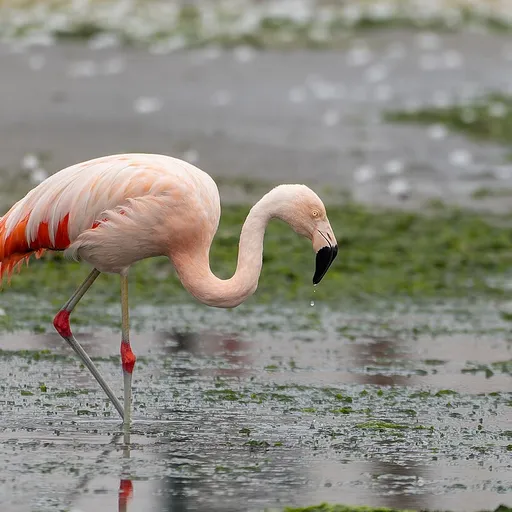
Chilean Flamingo
Phoenicopterus chilensis
Near Threatened
Overview
The Chilean flamingo (Phoenicopterus chilensis) is a large flamingo species standing between 110 and 130 cm tall. Closely related to the American and greater flamingos, it is distinguished by its lighter colour, smaller size, and specific behavioural traits. Currently classified as Near Threatened on the IUCN Red List, this species faces significant risks from habitat degradation.
Identification
- Plumage is pink, less intense than the American flamingo but pinker than the greater flamingo.
- Greyish legs featuring distinctive pink joints.
- Bill possesses more than half black coloration.
- Slightly smaller than the American flamingo, standing 110–130 cm tall.
Habitat
This species is mainly restricted to salt lagoons and soda lakes, environments that are particularly vulnerable to habitat loss from mining and irrigation. Its breeding range extends across South America from Ecuador and Peru south to Chile and Argentina, and east to Brazil.
Diet
The Chilean flamingo filter feeds with its head upside down in shallow water, using muscular tongues to push water through comb-like structures in its bill to capture algae, plankton, crustaceans, and other invertebrates. Long legs help stir up sediment to dislodge small organisms, allowing the bird to consume up to 10% of its body weight daily.
Did you know?
Chilean flamingos produce a crimson crop milk, a nutritious fluid secreted by glands in the crop, to feed their young. Each individual possesses a unique vocal call that enables it to recognise its offspring among flocks of tens of thousands of birds.
Sources
- Wikipedia · CC BY-SA 4.0
- Wikidata · CC0 1.0