
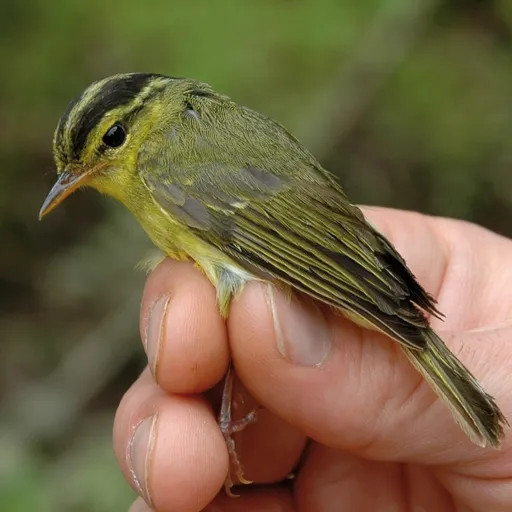
Limestone Leaf Warbler
Phylloscopus calciatilis
Least Concern
Overview
The limestone leaf warbler (Phylloscopus calciatilis) is a species of warbler in the family Phylloscopidae, first discovered in 1994 when it was mistaken for the similar sulphur-breasted warbler. It is currently classified as Least Concern on the IUCN Red List.
Identification
- Smaller than the sulphur-breasted warbler with more rounded wings and a proportionally larger bill.
- Greenish-olive plumage with a bright yellow throat, breast, and belly, where the sides of the breast have a green tinge.
- Features black lateral crown-stripes that are paler and more diffuse near the bill, and a greenish-yellow median crown stripe.
- Distinct call and song that are diagnostic and easily confirm the species' identity.
Habitat
This species inhabits broadleaved evergreen and semi-evergreen forest growing around limestone karst mountains in northern Vietnam, Laos, and potentially southern China. It is typically found on steep slopes in tall forests restricted to valley floors or karst landscapes, usually between 80 m and 1200 m elevation.
Did you know?
The species name, calciatilis, literally means "dwelling on limestone", a direct reference to its specialised habitat that helped define its identity when it was first mistaken for the sulphur-breasted warbler.
Sources
- Wikipedia · CC BY-SA 4.0
- Wikidata · CC0 1.0