
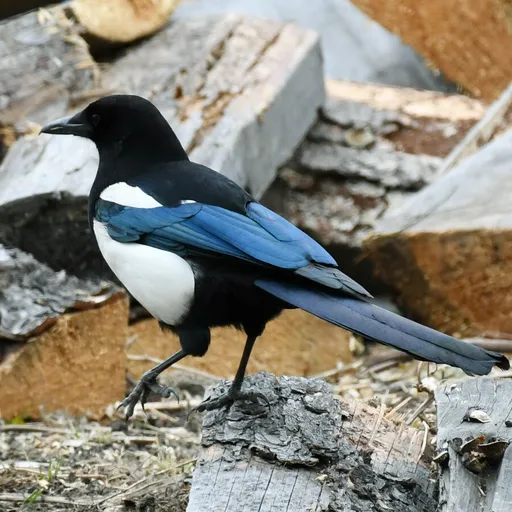
Black-rumped Magpie
Pica bottanensis
Overview
The Pica bottanensis, or black-rumped magpie, is a magpie species native to west-central China and Bhutan, with occasional presence in eastern Nepal and Sikkim. Long considered a subspecies of the Eurasian magpie, it was restored to full species status in 2018 based on molecular phylogenetic studies.
Identification
- Black-and-white pied plumage with a distinctive black rump, lacking the white found on other Pica species except the Asir magpie.
- Wings and tail are black with greeish-blue to purple iridescence, and large white stripes on the primary feathers are visible in flight.
- A stouter bill and a shorter tail compared to closely related Oriental and Eurasian magpies.
- Vocalisations include a subdued, warbling song that is only audible at close range, and a typical call described as a "raucous, explosive rapid chatter".
Habitat
Found at high altitudes across the Tibetan Plateau, including central Bhutan, western Sichuan, and eastern Tibet, the bird inhabits farmland, semi-open areas such as parks and gardens, and areas close to human habitation. While uncommon in the highest altitudes, it has been observed up to 4,800 m and has nested at 4,400 m.
Diet
The diet is largely carnivorous, consisting mainly of invertebrates, lizards, small mammals, frogs, and carrion. It primarily forages on the ground, side-hopping to catch prey while holding its tail upwards, and occasionally perches on cattle and sheep to feed on ectoparasites.
Did you know?
It forms massive, domed nesting structures composed of twigs and plant fibres, which are sometimes built on top of older nests. The species was first described as a separate taxon in 1840 but was not restored to species rank until 2018, having previously been treated as a subspecies of the Eurasian magpie for nearly a century.