
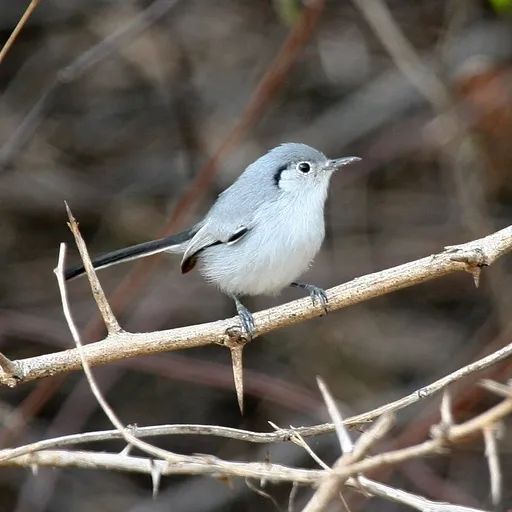
Cuban Gnatcatcher
Polioptila lembeyei
Least Concern
Overview
The Cuban gnatcatcher (Polioptila lembeyei) is a small passerine bird in the family Polioptilidae. It is endemic to Cuba and is classified as Least Concern on the IUCN Red List, although its restricted habitat faces threats from grazing and conversion.
Identification
- Measures 10 to 11 cm in length and weighs between 4.5 and 5 g.
- Males are blue-grey above and white below, featuring a unique black crescent behind the eye and ear coverts along with a long black tail with white outer feathers.
- Females resemble males but are paler with a thinner facial crescent, while juveniles are olive-grey above with buffy flanks and a creamy belly.
- Vocalisations consist of a sustained rambling, disorganised series of warbles, whistles, and chattering notes.
Habitat
Found along much of the north and southeast coasts of Cuba, as well as in disjunct areas along the south coast. The species inhabits xeric scrubland, predominantly below 100 m of elevation.
Diet
Although not thoroughly documented, the diet is assumed to consist of small insects and spiders. The bird forages actively among the lower branches of vegetation.
Did you know?
In a detailed study cited by Atwood et al (2020), 35 of 38 clutches were predated before the young fledged.
Sources
- Wikipedia · CC BY-SA 4.0
- Wikidata · CC0 1.0