
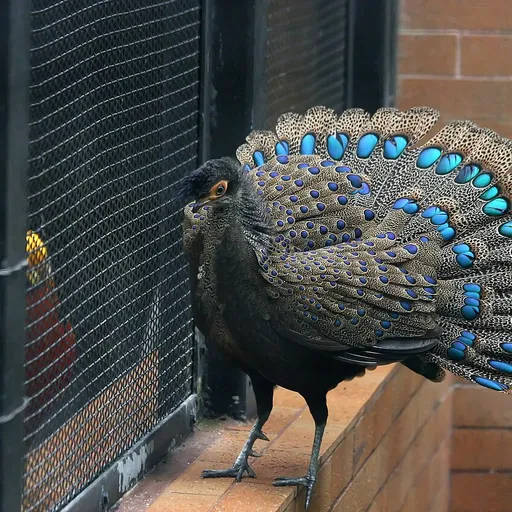
Malayan Peacock-Pheasant
Polyplectron malacense
Endangered
Overview
The Malayan peacock-pheasant (Polyplectron malacense), also known as the crested peacock-pheasant, is a medium-sized, endemic bird of the lowland forests of the Malay Peninsula. It is currently classified as Endangered on the IUCN Red List due to significant habitat loss and a shrinking population.
Identification
- Males: Approximately 50 cm long, with pale brown plumage featuring a 'salt-and-pepper' effect of small black spots and iridescent blue-green eyespots on the wings, back, and tail.
- Crest and Face: A loose, pointed, upturned dark blue-green crest on the forehead and bare pink facial skin that turns bright orange-red during courtship.
- Females: Smaller (c. 40 cm) and duller in colour, with a vestigial crest and eyespots limited to the flight feathers and tail.
- Bill and Legs: Both are blackish in colour.
Habitat
Endemic to the lowland dipterocarp rainforests of the Malay Peninsula from the Isthmus of Kra southwards, typically found up to 150 m above sea level. It is a sedentary species that now largely inhabits protected areas such as Taman Negara National Park and Krau Wildlife Reserve in Malaysia.
Diet
The species forages on the forest floor using its feet and bill to uncover invertebrates from the leaf litter. Its diet consists of a mix of plant matter, particularly fruits and seeds from Annonaceae, Fabaceae, and Fagaceae, along with small arthropods such as insects, mollusks, and isopods.
Did you know?
This pheasant produces curious clicking and vibrating sounds by using its feather quills, a behaviour known as stridulation, which is part of its courtship displays. It is one of the few pheasants known with certainty to have a one-egg clutch.
Sources
- Wikipedia · CC BY-SA 4.0
- Wikidata · CC0 1.0