
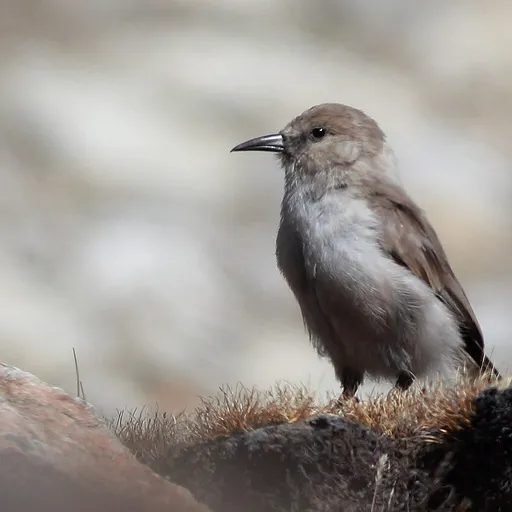
Ground Tit
Pseudopodoces humilis
Least Concern
Overview
The ground tit, also known as the Tibetan ground tit or Hume's ground tit (Pseudopodoces humilis), is a small passerine bird endemic to the Tibetan Plateau. It is the sole species in the genus Pseudopodoces and is classified within the tit family, Paridae, despite its unusual morphology.
Identification
- Approximately the size of a house sparrow with soft, lax, and extremely cryptic plumage consisting of darker fawn-brown upper parts and a greyish-fawn, tawny underside.
- Features a strong, slightly downcurved black bill that resembles that of a chough, along with black legs and feet.
- Head resembles certain tits with a darker cap and light nape patch, lacking the black feathers found in similar wheatears.
- Voice includes a plaintive whistling 'cheep-cheep-cheep-cheep' and a two-syllable finch-like call.
Habitat
Inhabits open alpine steppe and arid regions with scattered shrubs across the Tibetan Plateau in China, India, Nepal, and Bhutan, rarely occurring below 3,000 metres. It avoids areas with dense vegetation, particularly trees, and may descend to lower altitudes in valleys during winter.
Diet
Forages on the ground for a wide range of arthropod prey by probing and turning over yak dung, peering into rock crevices and holes, and digging in mud near puddles. Its extensive use of the bill for digging resembles that of the red-billed chough.
Did you know?
The bird builds its nest inside a burrow that it excavates itself, often digging horizontally into a bank for up to 1.8 metres to create a small chamber for the eggs. It also digs roosting burrows to use during the coldest months.
Sources
- Wikipedia · CC BY-SA 4.0
- Wikidata · CC0 1.0