
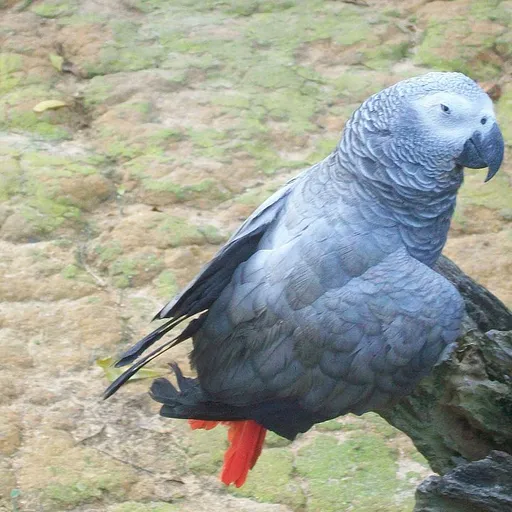
Grey Parrot
Psittacus erithacus
Endangered
Overview
The grey parrot, also known as the Congo grey parrot, is a medium to large-sized African parrot classified as Endangered on the IUCN Red List. It is celebrated for its exceptional intelligence and capacity for mimicking human speech, having been domesticated as a companion bird since ancient times.
Identification
- Predominantly grey plumage with darker head and wings, featuring a striking red tail with occasional black touches.
- Medium to large size with an approximate length of 33 cm and a wingspan of 46–52 cm, weighing between 400 g and 526 g in adulthood.
- Black bill with yellow irises in adults, contrasting with the dark grey to black eyes of juveniles.
- Highly vocal, known for a wide repertoire of sounds and the ability to imitate human speech and other bird calls.
Habitat
Native to equatorial Africa, the species ranges from Kenya to the eastern part of Ivory Coast, with populations also recorded on islands such as Príncipe and São Tomé. It favours dense forests but is also found at forest edges and in open vegetation types like gallery and savanna forests, though it has been virtually eliminated from parts of Ghana due to habitat loss and the pet trade.
Diet
Primarily frugivorous, the grey parrot consumes fruit, nuts, and seeds, including oil palm fruit, while occasionally eating flowers, tree bark, insects, and snails. In the wild, it is partly a ground feeder, whereas in captivity it is fed bird pellets, various fruits, and vegetables.
Did you know?
Grey parrots demonstrate remarkable altruistic behaviour, often sharing nuts with partners even when it means they will go without, and have been observed in court trials using their mimicked 'testimony' of victims' last words to provide evidence.
Sources
- Wikipedia · CC BY-SA 4.0
- Wikidata · CC0 1.0