
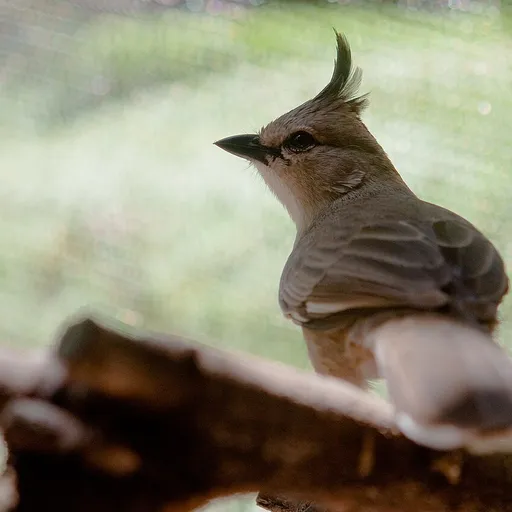
Chiming Wedgebill
Psophodes occidentalis
Least Concern
Overview
The chiming wedgebill, also known as the chiming whipbird, is a monotypic species of bird endemic to Australia. Classified as Least Concern on the IUCN Red List, it was separated from the chirruping wedgebill in 1973 based on distinct differences in vocalisation.
Identification
- Males weigh 38–45 grams and females 30–36 grams; both sexes appear similar, with dark gray-brown upperparts and wings that are slightly darker.
- The chest is forward-curving, the tail is dark with a black tip and a central pair of white-tipped feathers, while the chin, throat, and central belly are grayish-white.
- The bill is black, legs are dark gray, and the iris is dark brown; juveniles have horn-brown bills and lighter, fluffier plumage.
- Produces a call of 4–6 descending notes resembling loud chimes, often interpreted as “did-you-get-drunk” or “sweet-kitty-Lintorf.”
Habitat
Found in western and northern Australia, extending to the western side of Queensland and the northwest and south of the continent. The species is non-migratory and tends to remain in drier regions, moving only locally rather than undertaking long-distance journeys.
Diet
Feeds on insects and seeds taken from the ground. Specific foraging techniques or behavioural patterns are not documented.
Did you know?
The chiming wedgebill and chirruping wedgebill were treated as a single species until 1973, when they were split based solely on their markedly different calls, despite likely physical similarities.
Sources
- Wikipedia · CC BY-SA 4.0
- Wikidata · CC0 1.0