
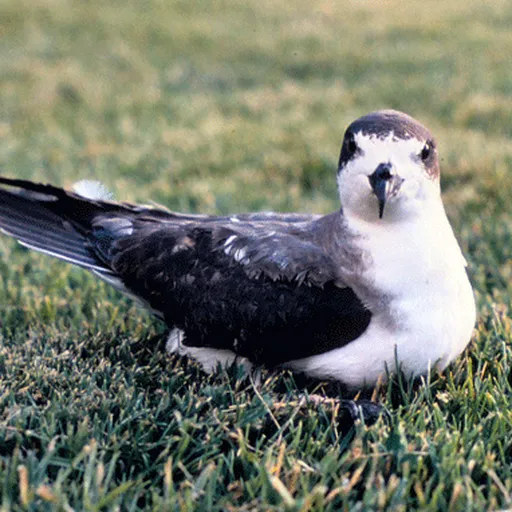
Hawaiian Petrel
Pterodroma sandwichensis
Endangered
Overview
The Hawaiian petrel, or ʻuaʻu (Pterodroma sandwichensis), is a large, dark grey-brown and white petrel that is endemic to Hawaiʻi. Classified as an endangered species, it was formerly found on most main Hawaiian Islands but is now primarily restricted to specific highland areas.
Identification
- Large size with long and narrow wings, featuring a wingspan of 91 cm.
- Wings and tail are sooty-colored, contrasting with the general dark grey-brown and white plumage.
- Bicolored feet are pink and black.
- Distinctive flight characterized by high, steeply banked arcs and glides.
- Adults produce a distinctive moaning "oo-ah-oo" when returning to nest burrows, along with yaps, barks, and squeals.
Habitat
The species is currently mostly restricted to Haleakalā crater on Maui, with smaller populations on Mauna Loa, Waimea Canyon, Lānaʻihale, and possibly Molokaʻi. Historically, it was found on all main Hawaiian Islands except Niʻihau. Nesting occurs in burrows or rock crevices, primarily during the highland areas.
Diet
The diet consists of 50–75% squid, with smaller percentages of fish and crustaceans. During the breeding season, parents forage during the day and return at night to feed their chicks by regurgitation, traveling as far as Alaska and Japan on two-week-long feeding trips.
Did you know?
The chicks are charcoal-gray in color and were considered a delicacy by early Hawaiians. Additionally, Hawaiʻi switched to digital television ahead of the national mandate specifically to dismantle analog towers that emitted light, thereby preserving the nesting season of this species.
Sources
- Wikipedia · CC BY-SA 4.0
- Wikidata · CC0 1.0