
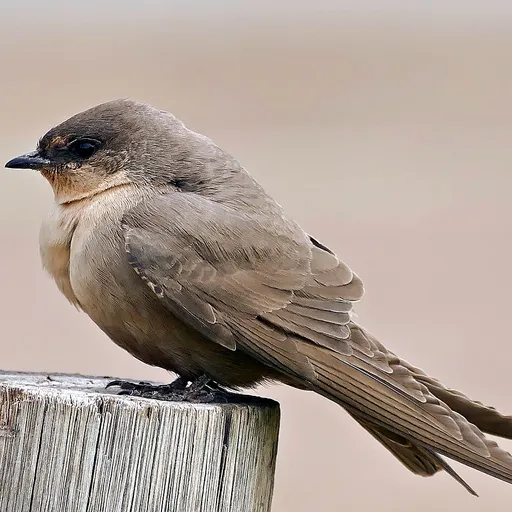
Large Rock Martin
Ptyonoprogne fuligula
Least Concern
Overview
The large rock martin, also known as the southern crag-martin, is a small passerine bird in the swallow family that is resident in southern Africa. It was formerly considered conspecific with the red-throated rock martin but is now treated as a distinct species.
Identification
- 12–15 cm long with mainly brown plumage, featuring a cinnamon chin, throat, and upper breast.
- A short, square tail displays small white patches near the tips, appearing as white 'windows' when spread in flight.
- Flight is slow and more acrobatic than the Eurasian crag martin, characterised by rapid wing beats interspersed with flat-winged glides.
- Calls include a soft, muffled twitter, a nasal 'vick', and a high-pitched 'twee' contact call.
Habitat
Breeds in hilly or mountainous country with cliffs and escarpment ridges, often far from water, but also at lower altitudes in rocky areas and around towns. It is largely resident but may make local movements or descend to lower altitudes after breeding. The species readily uses man-made structures such as buildings, dam walls, and bridges as substitutes for natural rock faces.
Diet
Feeds mainly on insects caught in flight, such as mosquitoes, flies, Hymenoptera, ants, and beetles, though it will occasionally feed on the ground. It often hunts along cliff faces to exploit standing waves in the airflow that concentrate insects near vertical areas. While it usually feeds alone, it may join flocks of up to 300 individuals at grass fires to feast on fleeing insects.
Did you know?
Little swifts sometimes forcibly take over the large rock martin's nests at shared nesting sites. Additionally, a 1975 finding in Kenya identified the tick Argas africolumbae in a nest of this species, which was then described under the synonym Ptyonoprogne fuligula rufigula.
Sources
- Wikipedia · CC BY-SA 4.0
- Wikidata · CC0 1.0