
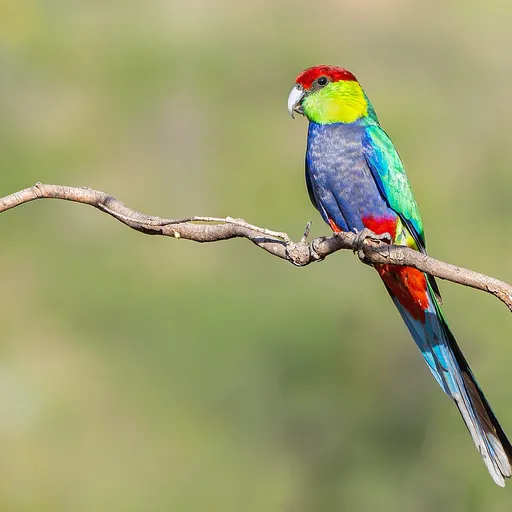
Red-capped Parrot
Purpureicephalus spurius
Least Concern
Overview
The red-capped parrot is a medium-sized, broad-tailed parrot native to southwestern Australia. It is an easily recognised species characterised by its distinctive elongated bill and vibrant, patterned plumage. Although it was historically classified in its own genus due to its unique bill structure, genetic analysis reveals it is most closely related to the mulga parrot.
Identification
- Purpureicephalus spurius measures 34–38 cm in length, with a distinctive long, pale blue-grey bill featuring a slender hook on the upper mandible.
- Adult males display a bright crimson crown, green-yellow cheeks, dark green upperparts, and purplish-blue underparts, while the female is slightly duller with a white stripe on the wing under-surface.
- The species exhibits a distinctive upright posture when perching and walking.
- Vocalisations include a rapidly repeated contact call transcribed as 'krukk-rak' or 'crrr-uk', and high-pitched loud notes when alarmed.
Habitat
This species inhabits the Southwest Australia ecoregion, ranging from Moore River to Esperance, predominantly within 100 km of the coastline. It favours eucalypt forests and woodlands, particularly those dominated by marri trees, as well as heathland, farmland, and suburban landscapes in the Perth region. The parrot is sedentary in higher rainfall areas but becomes locally nomadic in drier regions.
Diet
Predominantly herbivorous, the red-capped parrot feeds on seeds from eucalypts, particularly marri, as well as flowers, berries, and occasional insects. Its specialised bill allows it to extract seeds from eucalypt capsules with precision, and it has adapted to consume introduced plants such as thistles and orchard fruits like apples, from which it squeezes juice rather than eating the flesh. It also forages on grasses, herbs, and shrubs associated with marri-dominated vegetation.
Did you know?
The specific epithet spurius means 'illegitimate' in Latin, referencing the markedly different plumages of adult and immature birds, which makes the young appear unrelated to their parents. Additionally, the generic name Purpureicephalus translates to 'bastard red-head', derived from Latin and Ancient Greek roots.
Sources
- Wikipedia · CC BY-SA 4.0
- Wikidata · CC0 1.0