
Gentoo Penguin
Pygoscelis papua
Least Concern
Listen
XC875609 · steve · Antarctica · CC BY-SA 4.0
Overview
The gentoo penguin (Pygoscelis papua) is a species complex of penguins found in the Southern Hemisphere, including subantarctic islands and the Antarctic Peninsula. It is the third-largest penguin species and is noted for being the fastest underwater swimmer among all penguins.
Identification
- A broad white stripe extends like a bonnet across the top of the head, contrasting with the bright orange-red bill.
- Pale whitish-pink, webbed feet and a relatively long tail that sticks out and sweeps from side to side when waddling on land.
- Chicks have grey backs with white fronts.
- Calls include a loud, trumpeting sound emitted with the head thrown back.
Habitat
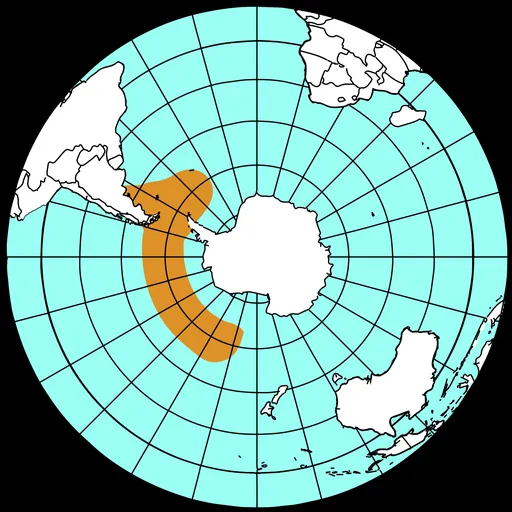
Gentoo penguins breed on ice-free surfaces, often in shallow coastal areas or inland among grass tufts on subantarctic islands such as the Falkland Islands, South Georgia, and the Kerguelen Islands. Their range extends to the Antarctic Peninsula and South Shetland Islands, where populations are rapidly increasing due to regional climate change.
Diet
Gentoos primarily eat fish, crustaceans such as krill and shrimp, and cephalopods, with the proportion of these items varying seasonally; for instance, crustaceans can make up 75% of the diet from March to June, while grey rockcod dominate from June to October. They are opportunistic feeders that do not store as much fat as Adélie penguins, relying on a greater net energy gain from hunting.
Did you know?
Gentoos possess a highly developed salt gland above their eyes that produces a highly saline solution, which drips from the tip of the beak to counteract the high sodium concentrations from their diet.
Sources
- Wikipedia · CC BY-SA 4.0
- Wikidata · CC0 1.0