
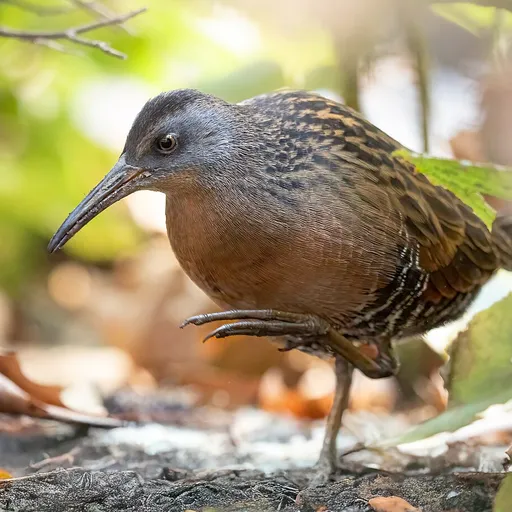
Virginia Rail
Rallus limicola
Least Concern
Overview
The Virginia rail (Rallus limicola) is a small, secretive waterbird belonging to the family Rallidae. Although fairly common despite habitat loss, they are more often heard than seen and are classified as Least Concern on the IUCN Red List.
Identification
- Adults measure 20–27 cm in length and are mainly brown, darker on the back and crown, with grey cheeks, a light stripe over the eye, and a whitish throat.
- Features include a long, slim reddish bill, orange-brown legs with long toes, and a short tail.
- The body is laterally compressed to allow passage through dense vegetation, and the strong forehead feathers withstand wear.
- Chicks are black, while juveniles are blackish brown on the upperparts with rufous feather edges and brownish bills and legs.
Habitat
This species inhabits freshwater and brackish marshes, moving to salt marshes in winter. Breeding ranges extend from Nova Scotia to southern British Columbia, California, and North Carolina, as well as Central America, with northern populations migrating south and some Pacific coast birds remaining as permanent residents.
Diet
Foraging primarily involves probing with the bill in mud or shallow water for insects, worms, and other invertebrates. During the non-breeding season, the diet shifts to include seeds and aquatic plants, though animals remain the primary food source during breeding.
Did you know?
Virginia rails possess the highest ratio of leg-muscle to flight-muscle of all birds, at 25% and 15% of body weight respectively. Their laterally compressed bodies and strong forehead feathers are specifically adapted for pushing through dense marsh vegetation.
Sources
- Wikipedia · CC BY-SA 4.0
- Wikidata · CC0 1.0