
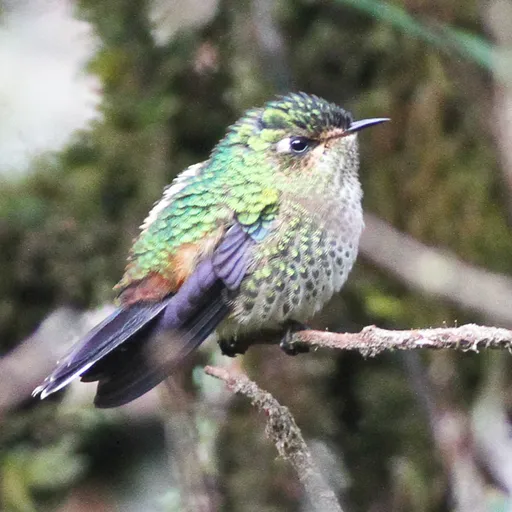
Purple-backed Thornbill
Ramphomicron microrhynchum
Least Concern
Overview
The purple-backed thornbill (Ramphomicron microrhynchum) is a species of hummingbird belonging to the coquettes tribe, Lesbiini. It is found across the Andes of South America, including Bolivia, Colombia, Ecuador, Peru, and Venezuela, and is currently classified as Least Concern by the IUCN despite believed population declines.
Identification
- Measures 8 to 9 cm in length and weighs approximately 3.5 g.
- Possesses the shortest bill of any hummingbird species.
- Males of the nominate subspecies display metallic violet-purple upperparts with a white spot behind the eye, an iridescent golden-green gorget, and bronzy green underparts.
- Females have shining green upperparts, white underparts with green dots, and a shorter, less forked tail with white-tipped outer feathers.
Habitat
Inhabits the edges of humid montane forest, Polylepis forest, páramo, and transitional zones between these biomes, generally ranging from 1,700 to 3,600 m in elevation. The subspecies R. m. bolivianum is also found well below the treeline in shrubby areas. The species moves from lower to higher elevations during the wet season.
Diet
Forages for nectar from the mid-level to the canopy, primarily using trap-lining techniques and often 'robbing' nectar from holes made by Diglossa flowerpiercers. Also feeds on insects caught on the wing or gleaned from flowers.
Did you know?
It is one of the very few hummingbird species that can nest in a cup made of fine plant fiber with moss and lichens on the outside, placed on a horizontal branch. Its song is described as a continuous series of quiet scratchy notes interspersed by short buzzes or dry trills.
Sources
- Wikipedia · CC BY-SA 4.0
- Wikidata · CC0 1.0