
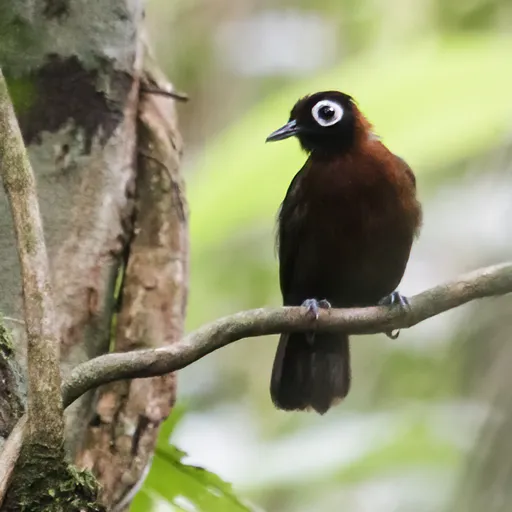
Chestnut-crested Antbird
Rhegmatorhina cristata
Least Concern
Overview
The chestnut-crested antbird, Rhegmatorhina cristata, is a species of bird in the family Thamnophilidae found in Colombia and Brazil. It is classified as a species of Least Concern by the IUCN Red List.
Identification
- 14 to 15 cm in length with a rufous-chestnut crown, crest, and nape in adult males.
- Black forehead, lores, face, and throat, accompanied by a pale bluish white ring of bare skin around the eye.
- Upperparts are dark olive-brown with rufous edges on wing feathers; adult females possess short black bars on their back feathers and lesser coverts.
- Song consists of a slow, slightly accelerating series of 8-10 fluted notes, while calls include a harsh, vibrant 'chirr' and an abrupt 'chip'.
Habitat
Found in eastern Colombia and western Brazil, generally between the Vaupés, Negro, and Japurá rivers. It primarily inhabits the understorey of humid terra firme evergreen forest, particularly on sandy soils, at elevations below 350 m.
Diet
An obligate ant follower, it feeds on arthropods fleeing foraging army ant swarms, such as those of Eciton burchelli. Foraging is typically done individually, in pairs, or in family groups by perching within about 1 m of the ground and sallying or pouncing to the ground after prey.
Did you know?
The bird is believed to be a year-round resident, yet its breeding season appears to occur from May to at least July, with no other details currently known about its breeding biology.
Sources
- Wikipedia · CC BY-SA 4.0
- Wikidata · CC0 1.0