
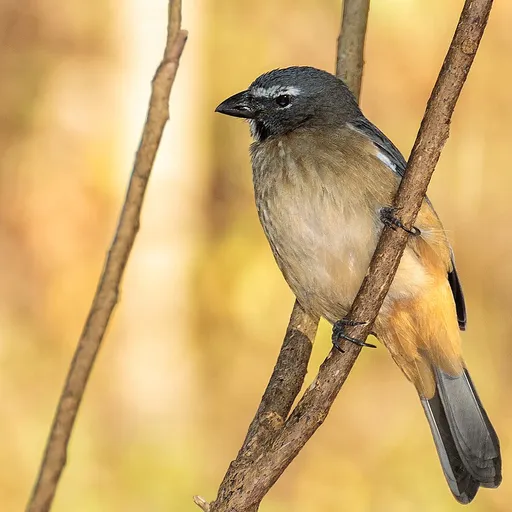
Olive-grey Saltator
Saltator olivascens
Least Concern
Overview
The olive-grey saltator (Saltator olivascens), also known as the Caribbean grey saltator, is a quiet, grey-colored passerine bird in the tanager family Thraupidae. It is a resident species native to parts of northern South America and Trinidad, having been recognised as a distinct species by the IOC in 2021 after being split from the greyish saltator based on vocal and genetic differences.
Identification
- Plumage: Primarily dark grey back (only slightly olive), light grey underside with buffy flanks and undertail coverts; juveniles appear washed olive and yellow.
- Head Markings: Distinct white superciliary 'eyebrows' and a thin white crescent under the eye, with black malar stripes framing a white throat.
- Bill: Thick, black, and slightly hooked at the end.
- Vocalisation: A stuttering song of harsh, downslurred notes alternating between high and low pitches, often accompanied by a short, high-pitched 'tseet!' call.
Habitat
Found across most of northern South America, ranging from northeastern Colombia through Venezuela, the Guianas, and extreme northern Brazil, as well as in Trinidad. This species favours edge habitats such as forest edges, shrublands, and second-growth forests, but also thrives in human-modified environments like orchards, gardens, and urban parks.
Diet
Olive-grey saltators are frugivorous, consuming fruits, leaves, flowers, and seed pods, with a preference for tender vegetation and morning glory flowers. They feed their chicks high-protein insects and may consume insects themselves during the dry season. These birds have a low-energy foraging strategy, eating quickly to process high-fibre foods efficiently.
Did you know?
This species has a low-energy lifestyle, spending little time on high-energy activities and instead devoting most of its time to resting, singing, or preening. Their nests are bulky, open-cup structures made of dead plant material that can occasionally incorporate human-made materials such as paper.
Sources
- Wikipedia · CC BY-SA 4.0
- Wikidata · CC0 1.0