
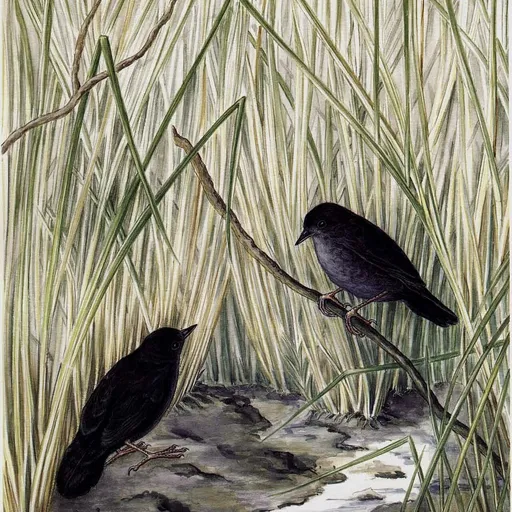
Marsh Tapaculo
Scytalopus iraiensis
Vulnerable
Overview
The marsh tapaculo (Scytalopus iraiensis), also known as the wetland tapaculo or tall-grass wetland tapaculo, is a recently discovered passerine bird endemic to Brazil. It belongs to the genus Scytalopus and is classified as Vulnerable on the IUCN Red List due to habitat loss and a declining population.
Identification
- Small, dumpy body with broad tail-feathers and a total length of approximately 12.5 cm.
- Upperparts are plain blackish, while underparts are dark grey; flanks are slightly barred with brown in young birds.
- Features reddish-brown legs and a dark bill.
- Song consists of a long series of short 'tchek' notes.
Habitat
This species occurs in seasonally flooded grasslands within river floodplains, inhabiting areas of tall, dense vegetation (60–180 cm) dominated by sedges and grasses. It is endemic to Brazil, with a range that includes sites in eastern Paraná and Rio Grande do Sul, as well as the highlands of Minas Gerais.
Diet
The marsh tapaculo forages at or near ground level, feeding on small arthropods, primarily insects such as bugs and beetles.
Did you know?
First sighted on 19 April 1997, this species was long believed to be restricted to about two dozen sites in southern Brazil before being discovered in the highlands of Minas Gerais, far north of its previously known range.
Sources
- Wikipedia · CC BY-SA 4.0
- Wikidata · CC0 1.0