
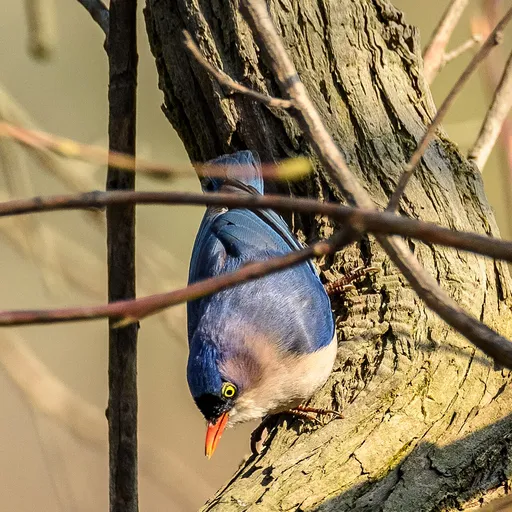
Velvet-fronted Nuthatch
Sitta frontalis
Least Concern
Overview
The velvet-fronted nuthatch (Sitta frontalis) is a small passerine bird in the nuthatch family Sittidae, native to southern Asia. It ranges from Nepal, India, Sri Lanka and Bangladesh east to southwestern China and Indonesia. This resident species is found in various forest types, from deciduous to evergreen, as well as in mangrove forests and coffee plantations.
Identification
- Length of 12–13.5 cm with a short tail and powerful bill.
- Violet-blue upperparts, lavender cheeks, buffy grey underparts, and a whitish throat.
- Bright orange-red to red bill, with a distinct black patch on the forehead and lores that is more developed in adults.
- Adult males display a black stripe running above the eye and over the head, which females lack.
- Pale yellow iris and a rapid chipping call, often described as a repeated "sit-sit-sit".
Habitat
It inhabits all types of forests, including deciduous, evergreen, and secondary growth, as well as Sonneratia mangrove forests in the Sunderbans and shade trees in south Indian coffee plantations. The species is a resident across its range in southern Asia, extending from the Himalayas and the Indian subcontinent to Indochina and parts of Southeast Asia.
Diet
This bird is an active feeder on insects and spiders, which it gleans from the bark of trunks and branches. Its strongly clawed toes allow it to climb down tree trunks and move on the undersides of horizontal branches. It frequently forages in mixed-species flocks with other passerines.
Did you know?
The Lotha Naga people consider the velvet-fronted nuthatch taboo to hunt, believing that killing the bird brings misfortune and that the hunter will soon see people around them die in quick succession. The Soliga people refer to the species as the 'maratotta', or 'tree hopper'.
Sources
- Wikipedia · CC BY-SA 4.0
- Wikidata · CC0 1.0