
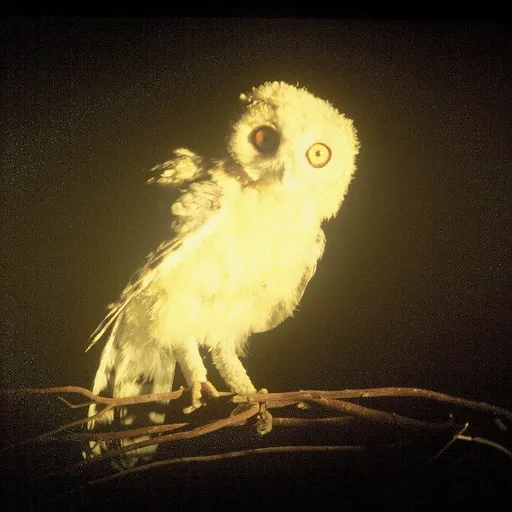
Desert Owl
Strix hadorami
Least Concern
Overview
The desert owl, also known as the desert tawny owl or Strix hadorami, is a medium-sized owl species that is closely related to the tawny owl. It is classified as Least Concern by the IUCN Red List and is largely nocturnal and sedentary.
Identification
- Stocky body with a round head that recalls a smaller, paler version of the tawny owl.
- Less streaked plumage, particularly on the underparts, featuring yellow eyes.
- A vocal call consisting of a hoooo-ho-ho-ho-ho rhythm similar to that of the Eurasian collared dove, with males producing a distinct call and females a deeper, less distinct one.
Habitat
The desert owl breeds in Israel, northeast Egypt, Jordan, and the Arabian Peninsula. It inhabits deserts, semi-deserts, rocky ravines, and palm groves, typically nesting in crevices and holes in cliffs.
Diet
This species feeds on voles, mice, and large insects.
Did you know?
For over a century, the species was known by the scientific name Strix butleri, but a 2015 study revealed that the original holotype was actually an Omani owl, prompting the renaming of the widespread species to Strix hadorami in honour of the Israeli ornithologist Hadoram Shirihai.
Sources
- Wikipedia · CC BY-SA 4.0
- Wikidata · CC0 1.0